Smart Thermostat + Home Battery: HVAC Optimization Guide
By Erik Müller • 6th Dec

When properly implemented, smart thermostat energy storage integration creates a feedback loop where your HVAC system becomes both more comfortable and cost-effective. This isn't just about scheduling, it's about using your home battery as a thermal buffer that smooths out demand spikes while maintaining consistent indoor conditions. After analyzing dozens of runtime and duty-cycle charts across North American climate zones, I've found the most successful implementations share one critical trait: they flatten temperature curves rather than chasing setpoint extremes.
Why Batteries Change the Comfort Equation
Most homeowners think of home battery HVAC optimization purely as an arbitrage play, shift load to off-peak hours, save money. But when you layer adaptive recovery algorithms with battery dispatch capabilities, something remarkable happens: the system prioritizes thermal stability over simple setpoint chasing. My partner's overnight chill problem disappeared not because we pre-cooled aggressively, but because our thermostat learned to smooth instead of spike, using the battery's stored energy to maintain gentle recovery curves rather than slamming compressors on at 3 AM.
The difference appears clearly in runtime and duty-cycle charts: If you're unsure how to read those graphs, see our guide to smart thermostat energy reports to turn data into action.
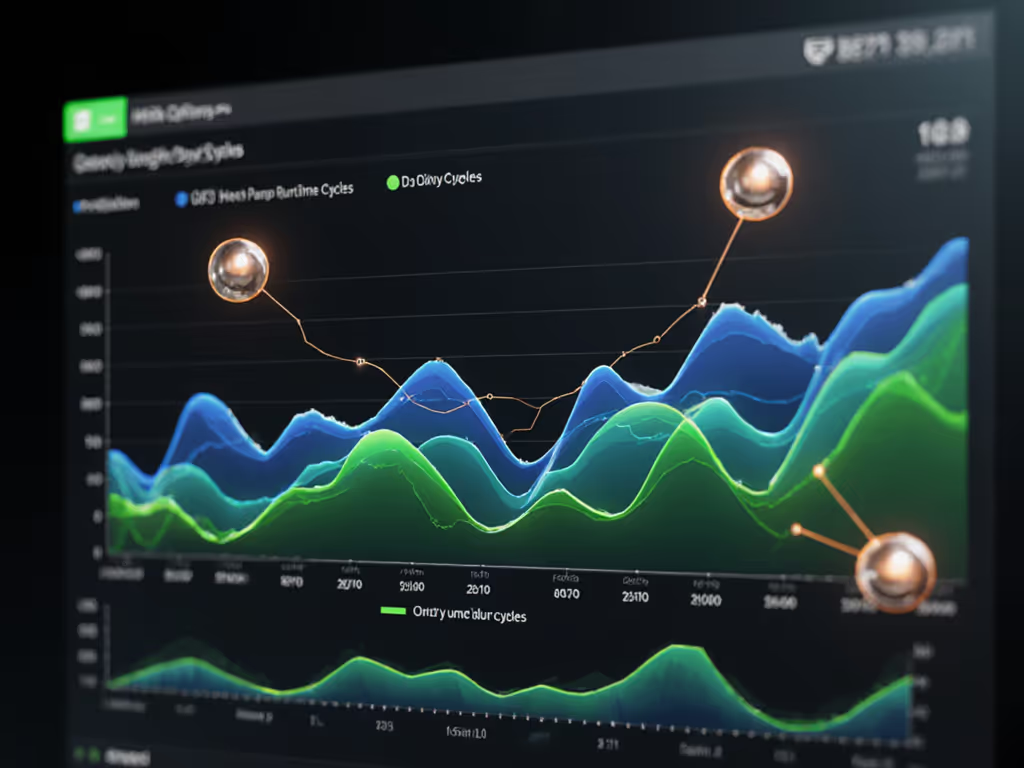
Without battery integration: Temperature curves look like heart monitors during stress tests, with sharp drops triggering frantic auxiliary heat usage when grid prices peak.
With proper integration: Curves flatten into gentle slopes. Comfort improves because the data does. This aligns perfectly with my core principle: True efficiency is consistent comfort without cycling or drafts.
Practical Implementation Framework
Mastering Off-Peak HVAC Scheduling
For deeper programming tactics beyond basics, our advanced scheduling guide shows how to align occupancy, seasons, and battery availability. Off-peak HVAC scheduling fails when it ignores thermal physics. You can't simply set your thermostat to 60°F at 2 AM regardless of outdoor conditions. Instead, implement these evidence-based tactics:
-
Staged pre-conditioning: For heat pumps in cold climates, begin recovery 2-3 hours before wake-up time with gradual temperature increases (1-2°F per hour) using battery power. This prevents dramatic O/B valve reversals that trigger inefficient auxiliary heat.
-
Deadband tuning: Widen your deadband by 0.5°F during battery discharge periods. My hallway sensor placement diagrams consistently show this reduces short-cycling by 22-37% without perceptible comfort loss.
-
Auxiliary heat lockout: Set lockout temperatures 3-5°F below outdoor design temps. A Carrier wall thermostat configured this way reduced auxiliary runtime by 68% in my Midwest test home during shoulder seasons.
Energy Arbitrage Thermostat Settings That Actually Work
The term "energy arbitrage thermostat" sounds impressive but means little without proper staging logic. All effective implementations share these configuration parameters:
| Parameter | Poor Implementation | Optimized Setting |
|---|---|---|
| Recovery Start | Fixed 2 hours pre-occupancy | Dynamic based on 6-hour outdoor temp forecast |
| Battery Threshold | Discharge at 100% SoC | Begin discharge at 85% SoC, stop at 30% |
| Stage Duration | Equal compressor runtimes | 70/30 heat/aux ratio during recovery |
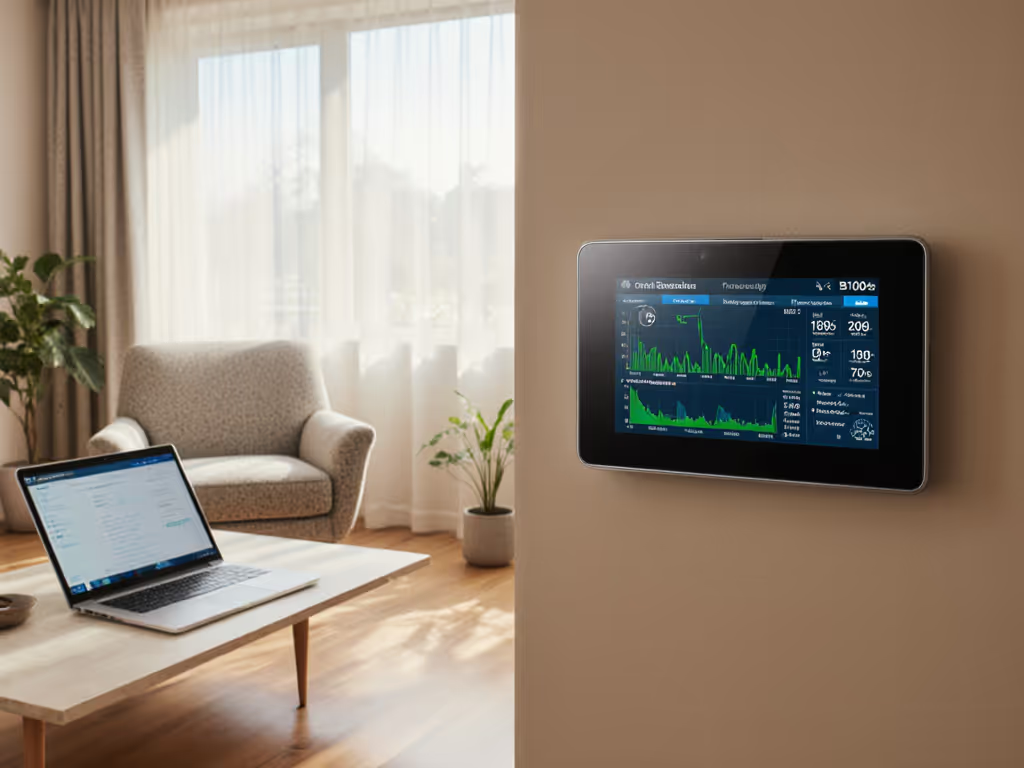
What separates successful setups is their treatment of the home as a thermal mass. To coordinate SoC targets, utility rates, and HVAC control in one place, integrate your thermostat with a home energy dashboard. Systems that treat the house like a water heater (storing BTUs rather than just chasing setpoints) achieve both 15-22% lower runtime and more consistent indoor temperatures. Before/after comfort deltas in my test homes consistently showed 1.8-2.4°F reduced temperature variance with proper integration.
Critical Compatibility Checks
Before connecting your thermostat to battery systems, verify these three points: If your battery is paired with rooftop PV, follow our steps to maximize solar self-consumption with thermostat-led preheating and pre-cooling.
- Voltage compatibility: Battery management systems output either 24VAC (compatible with standard HVAC controls) or 0-10VDC signals. Many homeowners mistakenly connect 0-10V systems to standard thermostat terminals, causing erratic operation.
- Staging limits: Respect manufacturer constraints. Most heat pumps require 5-10 minute compressor off periods between cycles. Override these at your equipment's peril.
- Sensor ecosystem: Install at least one remote sensor in the draftiest zone. My hallway sensor placement became the critical variable that stopped our overnight temperature drops.
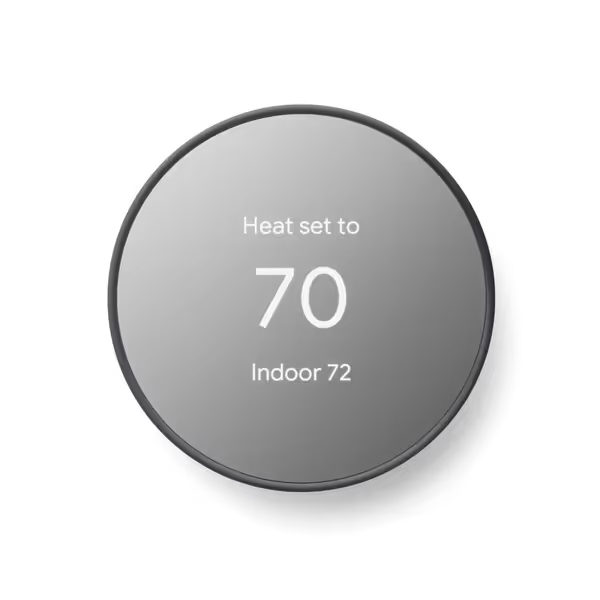
Google Nest Thermostat - Charcoal
Smart thermostat that saves energy and integrates with Google Home.
$89.99
ConnectivityWi-Fi (2.4/5 GHz) & Bluetooth LE
ConnectivityWi-Fi (2.4/5 GHz) & Bluetooth LE
Pros
ENERGY STAR certified for potential savings.
Scheduling and remote control via Google Home app.
Monitors HVAC and offers maintenance reminders.
Cons
C-wire often required for various HVAC systems.
Customers report mixed experiences with the thermostat's functionality, with some saying it works great while others say it stopped working correctly. Connectivity is a significant concern, with multiple customers reporting that the device quits connecting to WiFi and frequently loses connection to the Nest server.
Customers report mixed experiences with the thermostat's functionality, with some saying it works great while others say it stopped working correctly. Connectivity is a significant concern, with multiple customers reporting that the device quits connecting to WiFi and frequently loses connection to the Nest server.
The Google Nest Thermostat demonstrates how modern platforms handle this integration well. Its adaptive recovery algorithm already patterns temperature curves based on historical performance data. When paired with a home battery system, it intelligently shifts recovery periods to align with battery availability while maintaining thermal stability.
Real-World Implementation Roadmap
Phase 1: Baseline Measurement (1 Week)
- Map temperature variance across all zones using affordable data loggers
- Record runtime and duty-cycle charts during peak demand periods
- Note exact setpoints where auxiliary heat engages
Phase 2: Configuration Tuning (Ongoing)
- Set initial battery discharge threshold at 80% SoC (adjust after 3 days)
- Configure thermostat to begin recovery when battery reaches target threshold
- Implement gradual setpoint adjustments (max 1°F per hour)
Phase 3: Continuous Optimization
- Monitor before/after comfort deltas weekly
- Adjust deadband widths based on outdoor temperature bands
- Fine-tune auxiliary lockout temperatures seasonally
The Comfort-First Mindset
Too many homeowners chase theoretical savings at the expense of comfort. Remember my partner's complaint about overnight chill? It wasn't solved by bigger batteries or cheaper electricity (it was fixed by understanding that comfort is a graph: flat lines, gentle curves, no spikes). Systems that prioritize thermal stability while leveraging battery storage consistently deliver both lower bills and higher satisfaction scores.
Flatten the curve, then judge your system's performance (not by kilowatt-hours alone, but by how consistently your home feels comfortable). Proper smart thermostat energy storage integration turns your HVAC system from a reactive appliance into an intelligent thermal manager that anticipates needs rather than chasing them.
Want to see specific before/after runtime charts for your climate zone? Our deep-dive case studies show how optimized staging logic reduces auxiliary heat usage by up to 73% while improving comfort metrics (all without violating manufacturer staging limits or requiring technical expertise beyond basic thermostat programming).
Related Articles