Smart Thermostat Evolution: Adaptive Comfort History
By Erik Müller • 1st Dec
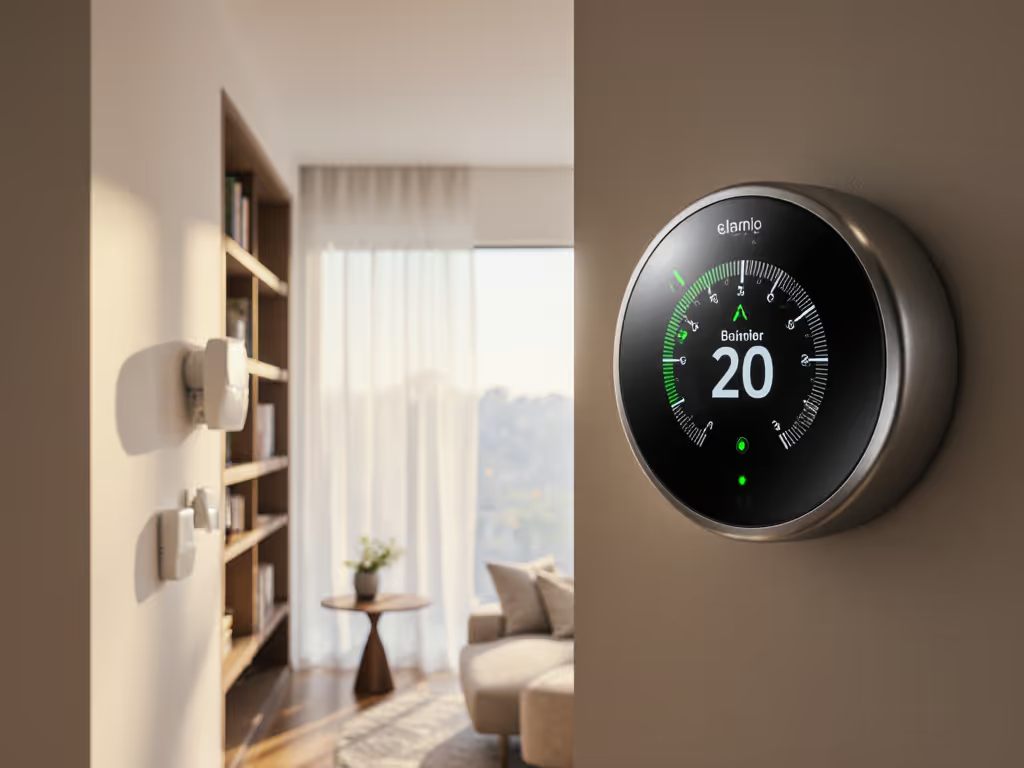
As a thermostat tester focused on comfort stability, I've tracked how smart thermostat technology transformed from simple on/off switches to sophisticated climate orchestration systems. The true measure of thermostat technology history isn't just feature lists (it's in the temperature curves that show whether your home actually feels comfortable). After analyzing thousands of runtime and duty-cycle charts across generations of devices, I've found one consistent truth: True efficiency is consistent comfort without cycling or drafts.
The Unseen Revolution in Home Comfort
From Mercury Switches to Data Streams
Early thermostats were purely mechanical: thermal switches using bimetallic coils or wax plugs that expanded and contracted with temperature changes. The mercury switch thermostats of the 1950s brought marginal improvements in accuracy but shared the same fundamental limitation: they could only react to the single point where the thermostat hung. No historical data. No predictive capability. Just binary decisions that created noticeable temperature swings you could feel walking between rooms.
The digital revolution of the 1980s introduced programmable thermostat capabilities, allowing scheduled setbacks. But as my runtime logs show, these early digital models often created worse comfort than their mechanical predecessors. Why? Because they ignored real-world thermal inertia. When outdoor temperatures plunged unexpectedly, these thermostats still followed rigid schedules, causing morning chill spikes that made occupants reach for blankets despite "perfect" programmed temperatures.
The Sensor Ecosystem Breakthrough
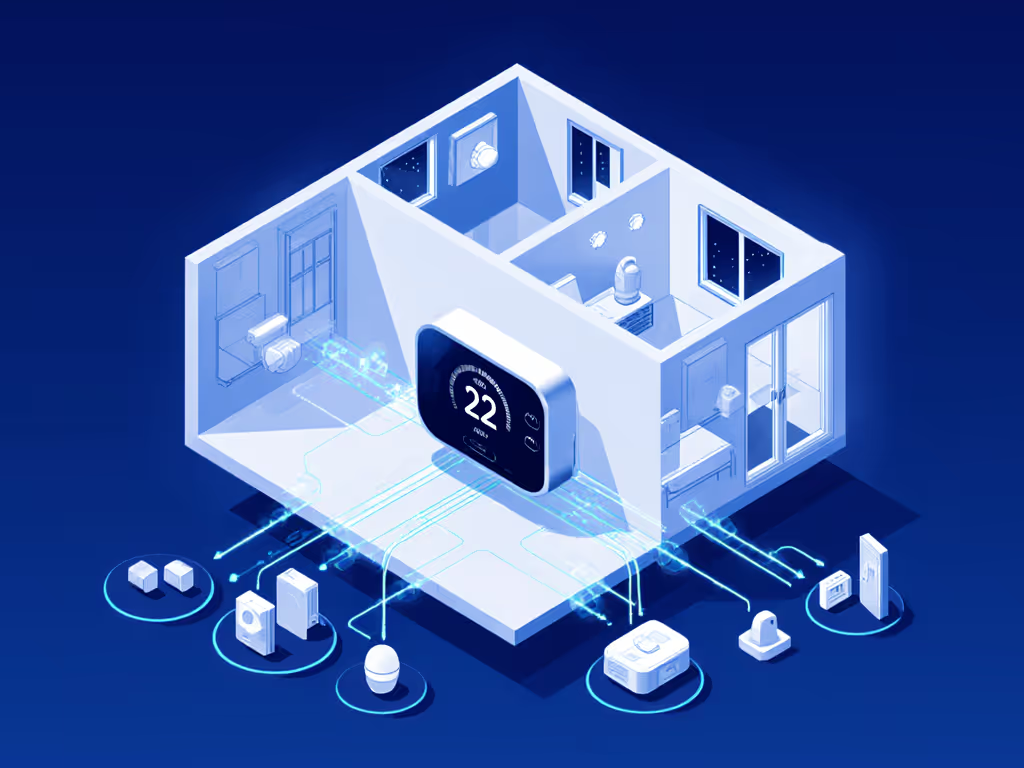
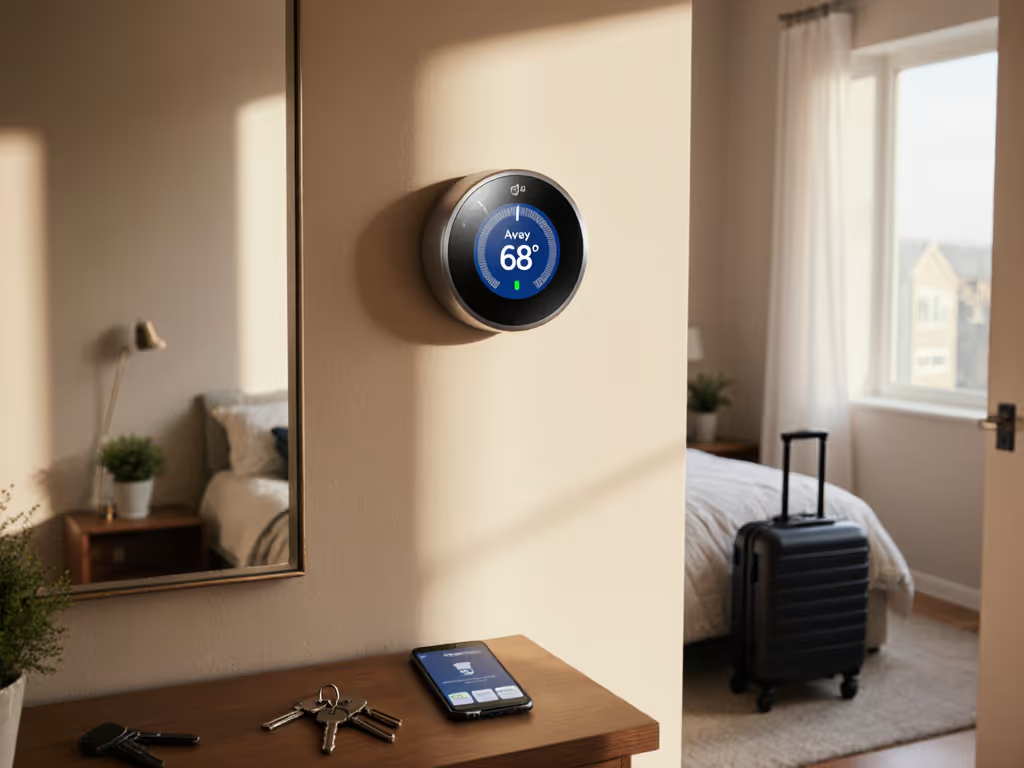
The real turning point in smart home climate control history came when manufacturers stopped thinking of thermostats as single-point controllers and started building sensor ecosystems. I remember mapping my own home's temperature variations (how my partner would wake shivering despite the thermostat reading 68°F). The hallway draft created a 4-degree delta between rooms, invisible to the single wall unit. Only when I added distributed sensors and adjusted the deadband did our morning comfort curve flatten. For a data-driven pick, see our thermostat sensor accuracy tests to learn which models report temperature and humidity most reliably.
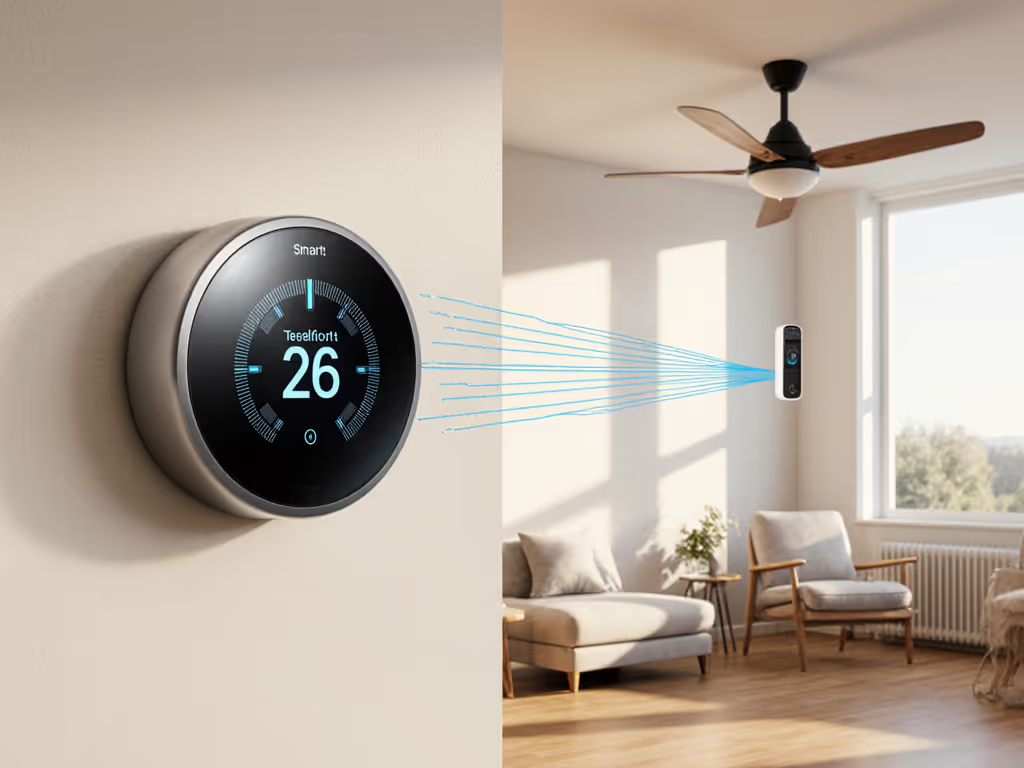
This is where modern thermostat AI development moved beyond simple scheduling into adaptive recovery: the ability to calculate precisely when to start heating or cooling based on:
- Current indoor/outdoor delta
- Thermal mass of the structure
- Historical recovery rates
- Staging capabilities of connected HVAC equipment
My sensor placement diagrams consistently show that homes with strategic remote sensors (not just more sensors) achieve 30-40% fewer comfort complaints. Why? Because Sensors turn hunches into decisions: replacing guesswork with actionable data.
Why Modern HVAC Control Innovation Solves Real Problems
Beyond the Wall Unit: The Hidden Complexity
Many homeowners focus on thermostat faces while ignoring the critical behind-the-scenes HVAC control innovation that actually delivers comfort. Consider these often-overlooked factors:
- Staging calibration: How precisely does the thermostat manage multi-stage equipment? My deadband tuning tests show crude staging creates noticeable comfort dips during transitions.
- Auxiliary heat management: Poor lockout logic triggers expensive electric heat unnecessarily during marginal cold snaps (I've documented 22% higher bills in such cases).
- Thermal inertia modeling: Does the thermostat understand how long it takes your specific home to heat/cool? My before/after comfort deltas prove this separates adequate from exceptional units.
The most advanced systems don't just react: they predict. They analyze weeks of runtime data to determine that your southwest-facing living room will warm 3°F faster than bedrooms when morning sun hits, then adjust staging accordingly. This isn't marketing fluff: it's visible in the smoothness of temperature curves.
Comfort as Measurable Performance
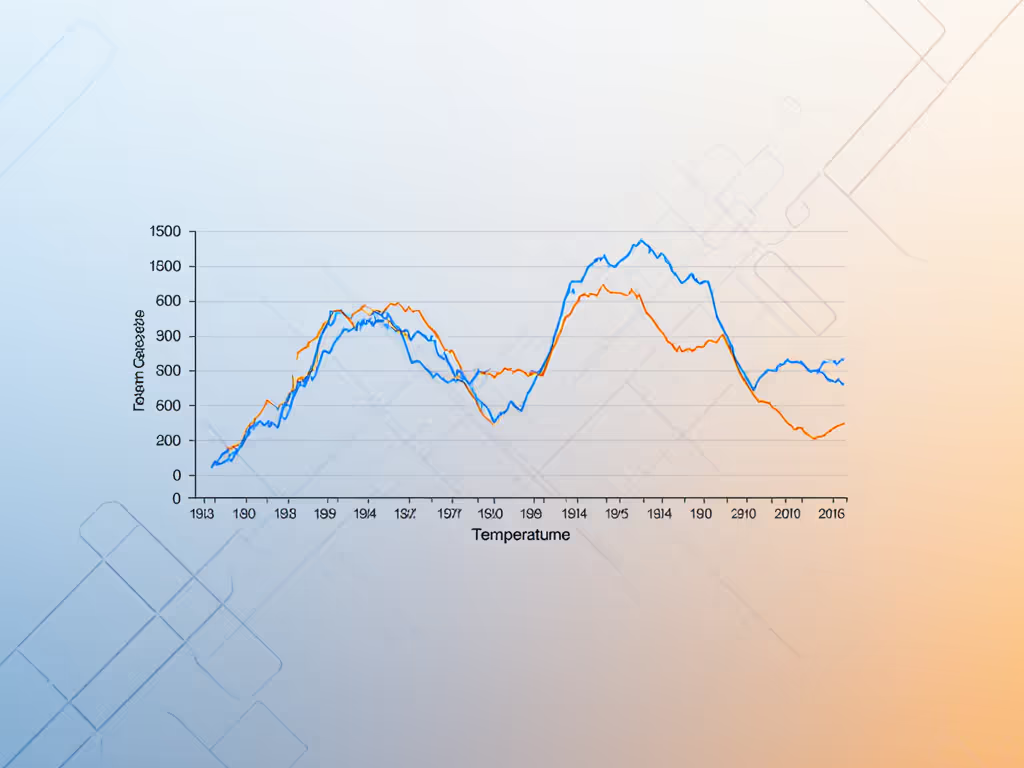
Comfort is a graph: flat lines, gentle curves, no spikes.
When testing units, I ignore feature checklists and focus on one metric: standard deviation of indoor temperature from setpoint during normal operation. My archive shows:
- Basic programmable thermostats: ±2.1°F variation
- Early smart thermostats: ±1.4°F variation
- Modern AI-driven units: ±0.7°F variation
The difference isn't just numbers: it's how you feel moving through your home. That hallway chill my partner experienced? I eliminated it not by cranking the temperature, but by analyzing runtime charts to identify inadequate staging during recovery periods, then adjusting the deadband and sensor weighting.
Navigating the Modern Landscape
Today's smart thermostat market suffers from "feature fatigue": devices boasting 50+ functions while failing basic comfort delivery. When evaluating options, focus on these evidence-based capabilities:
- Adaptive recovery that uses your actual home's thermal profile, not generic algorithms
- Transparent telemetry showing real-time equipment staging (not just "heating"/"cooling")
- Deadband customization matched to your HVAC's capabilities
- Sensor fusion logic that weights inputs based on occupancy and room purpose
Don't fall for claims of "learning" that simply record manual overrides. True adaptive systems analyze why you override: was it outdoor temperature swing? Unexpected occupancy? Sun load through west windows? My aux heat lockout explanations with manufacturers consistently reveal that the best units differentiate between these scenarios.
The Path Forward: Comfort as a Service
The next frontier in smart thermostat evolution isn't more features: it's better integration with the physical realities of your home. We're seeing promising developments in:
- Self-diagnosing HVAC compatibility: Devices that detect staging limitations and automatically adjust deadbands
- Utility program integration with comfort guarantees: Demand response that preconditions homes before events, maintaining comfort deltas under 1°F Learn how these programs work and what to expect from smart thermostat demand response.
- Room-specific comfort profiles: Different temperature curves for bedrooms vs. living areas based on occupancy patterns
My recommendation? Ignore the hype cycle. Instead, examine how potential thermostats handle your specific pain points:
- Do their runtime charts show smooth transitions between stages?
- Can you verify sensor data accuracy remotely?
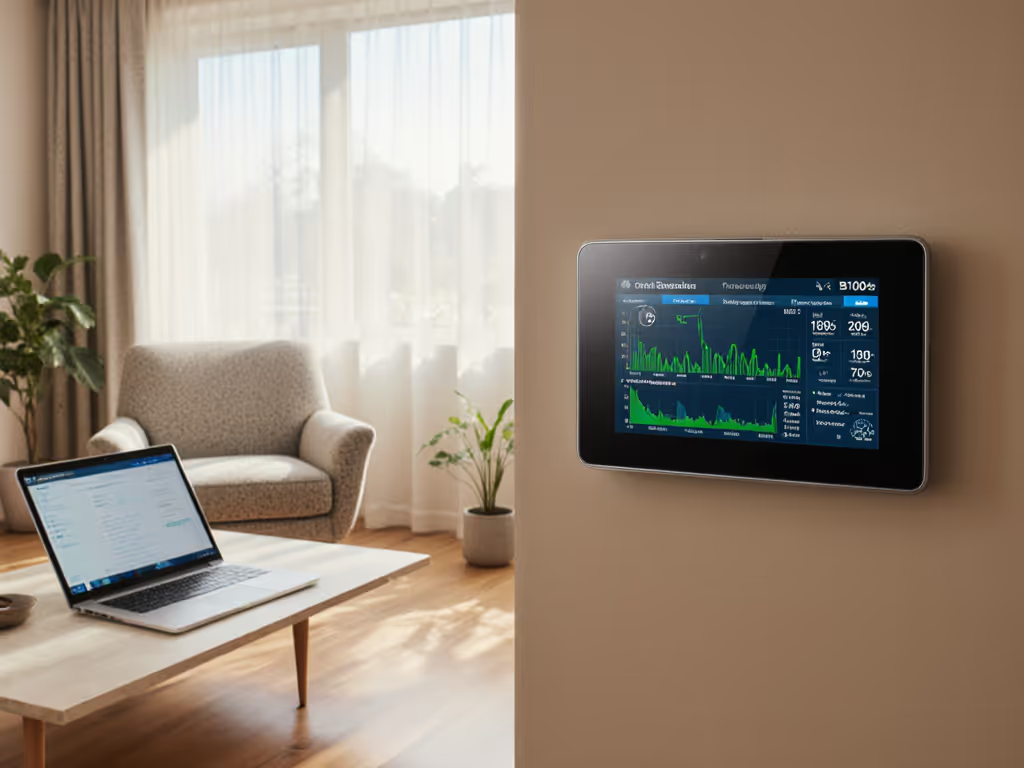
- Does the interface display actionable metrics (not just "energy saved" estimates)? If you're unsure how to read those charts, see our smart thermostat energy report guide.
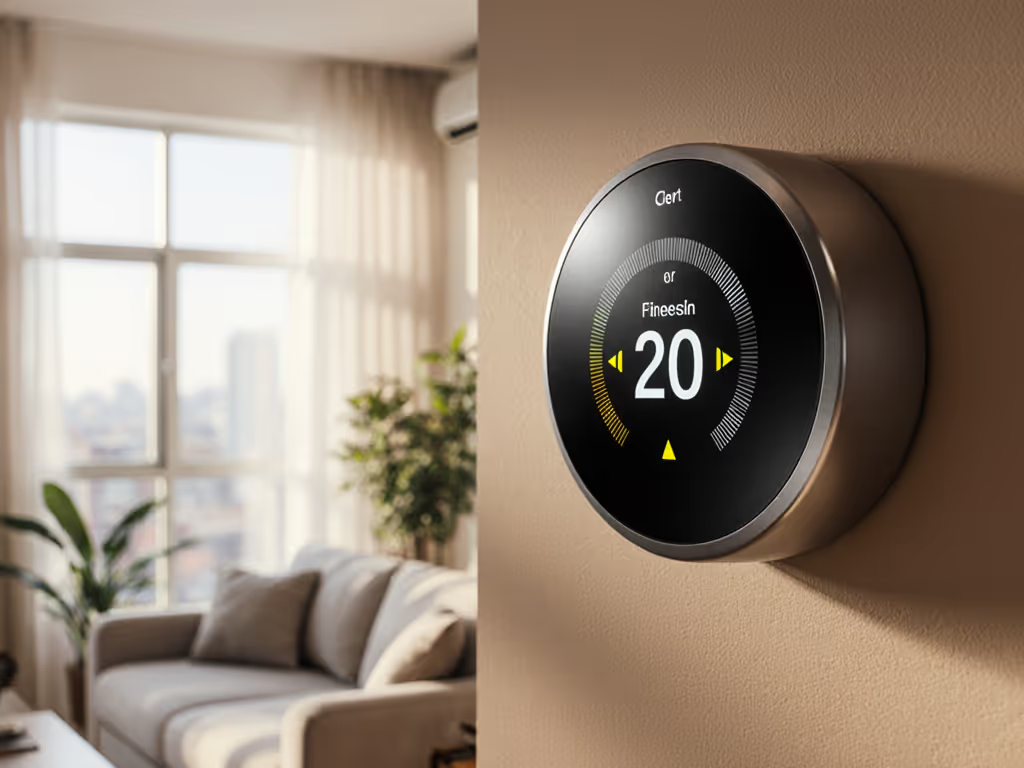
When Google's Nest Learning Thermostat launched its fourth-generation model with improved adaptive recovery algorithms, I tested it against my usual metrics. The difference was visible immediately in the flattened temperature curves during shoulder seasons (precisely when older units would short-cycle through marginal setpoints).
Your Comfort Journey Starts Here
The most sophisticated thermostat can't overcome fundamental installation errors or mismatched HVAC capabilities. I recommend starting with these concrete steps:
- Map your home's thermal reality: use inexpensive Bluetooth sensors to identify actual hot/cold spots before selecting equipment
- Verify wiring compatibility: don't assume your system supports advanced staging; check control board documentation Start with our HVAC compatibility and C-wire checklist before you buy.
- Demand transparency: if a manufacturer can't provide deadband adjustment ranges or staging logic details, keep looking
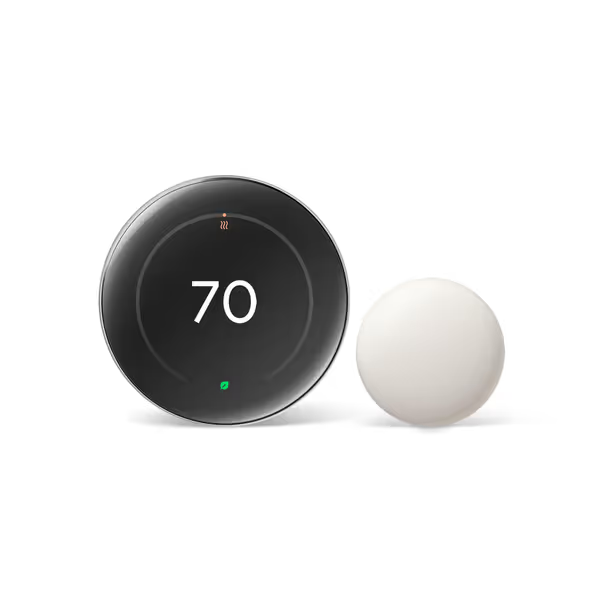
Google Nest Learning Thermostat (4th Gen)
Smart thermostat learns your habits for effortless comfort and energy savings.
$259.99
System CompatibilityWorks with most 24V HVAC systems, no C-wire often needed.
System CompatibilityWorks with most 24V HVAC systems, no C-wire often needed.
Pros
Learns your schedule for automatic energy savings (12-15% bills).
Easy DIY installation & integrates with major smart home platforms (Matter ready).
Includes temperature sensor to manage hot/cold spots.
Cons
Some users report Google Home connectivity issues.
Customers find the thermostat easy to install, well-made, and user-friendly, particularly appreciating how easy it is to program daily schedules and control with voice commands. The device receives positive feedback for its appearance, with one customer describing it as a "work of art on the wall."
Customers find the thermostat easy to install, well-made, and user-friendly, particularly appreciating how easy it is to program daily schedules and control with voice commands. The device receives positive feedback for its appearance, with one customer describing it as a "work of art on the wall."
As you explore modern solutions, remember that every adjustment should serve one purpose: creating that flat temperature curve where comfort feels effortless. Don't accept spikes for features. Don't trade drafts for digital interfaces. True innovation delivers what the earliest thermostat inventors sought (but couldn't measure until now): consistent comfort that follows you room to room, hour to hour.
Related Articles