Age-Based Thermostat Settings: Multi-Gen Home Comfort
By Mateo Alvarez • 26th Nov
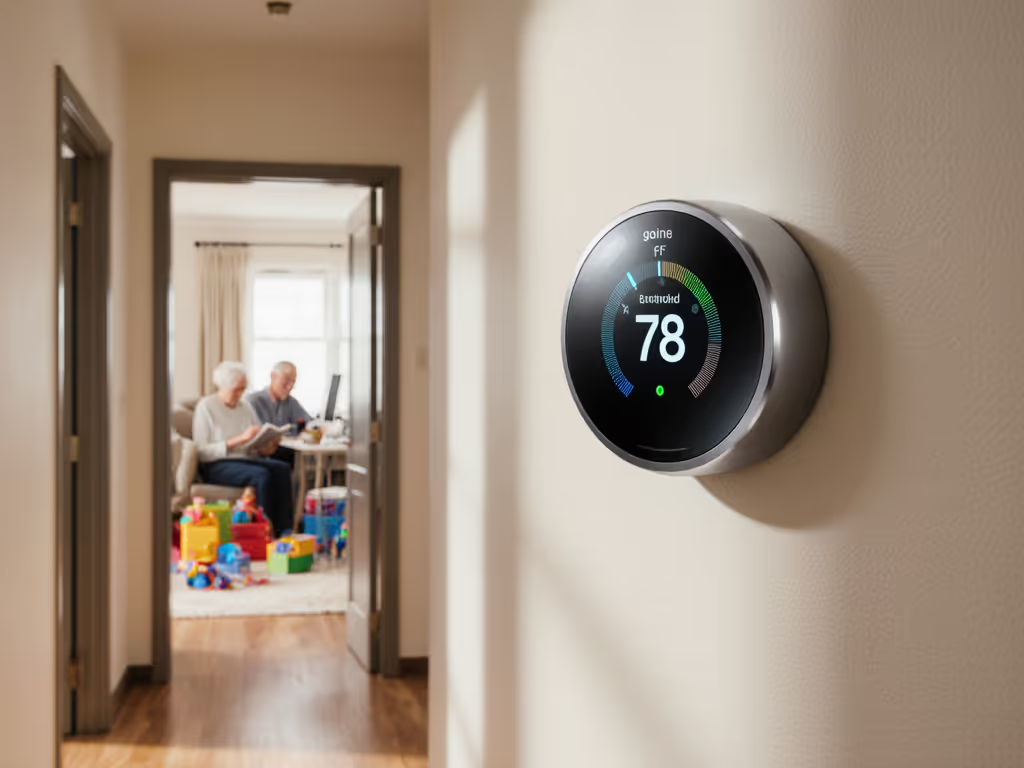
Managing a multi-generational home thermostat requires understanding the nuanced family temperature preferences across different age groups. When grandparents, parents, and children share living space, conflicting comfort needs can turn your HVAC system into an energy-wasting battleground rather than a source of predictable savings. As an energy analyst who maps thermostat behavior to utility rates, I've seen too many households sacrifice both comfort and dollars trying to accommodate everyone's ideal climate zone. The solution lies not in compromise, but in strategic, data-driven temperature management that respects physiological needs while optimizing runtime and costs.
The Science Behind Age-Based Comfort Zones
Physiological differences explain why a seemingly simple thermostat becomes a family negotiation point. Older adults (65+) often prefer warmer environments, typically 70-75°F (21-24°C), due to decreased metabolism and circulation. According to the National Institute on Aging, seniors lose the ability to regulate body temperature as efficiently, making them susceptible to hypothermia even at temperatures comfortable for younger adults.
Children and teenagers frequently run warmer, preferring settings around 68-72°F (20-22°C). Their higher metabolic rates generate more body heat, while developing thermoregulatory systems respond differently to environmental shifts. A study in Pediatrics found that infants sleep better in cooler rooms (68-72°F), but their temperature perception evolves rapidly through childhood.
Younger adults typically fall in the middle range (68-74°F), creating the classic 'thermostat tug-of-war' in multi-generational households. This isn't just preference. It is biology. When I modeled my parents' time-of-use plan, I discovered their winter thermostat conflicts weren't arguments but physiological needs. By implementing simple pre-heat profiles with clear override options, we maintained comfort while shaving demand charges.
Consider these energy impact scenarios for a typical 2,200 sq ft home:
| Scenario | Avg. Temp Difference | Annual Energy Impact | Dollar Impact (at $0.15/kWh) |
|---|---|---|---|
| Single temperature setting | 0°F | Baseline | $1,800 |
| Compromise setting (3°F gap) | 3°F | +8% usage | $1,944 (+$144) |
| Strategic zoning solution | 2°F | +3% usage | $1,854 (+$54) |
The key isn't eliminating temperature variation but managing it intelligently. Never implement settings that compromise safety, especially for elderly relatives who may not recognize dangerous cold conditions.
Practical Multi-Gen Climate Control Strategies
Floor-by-Floor Temperature Targeting
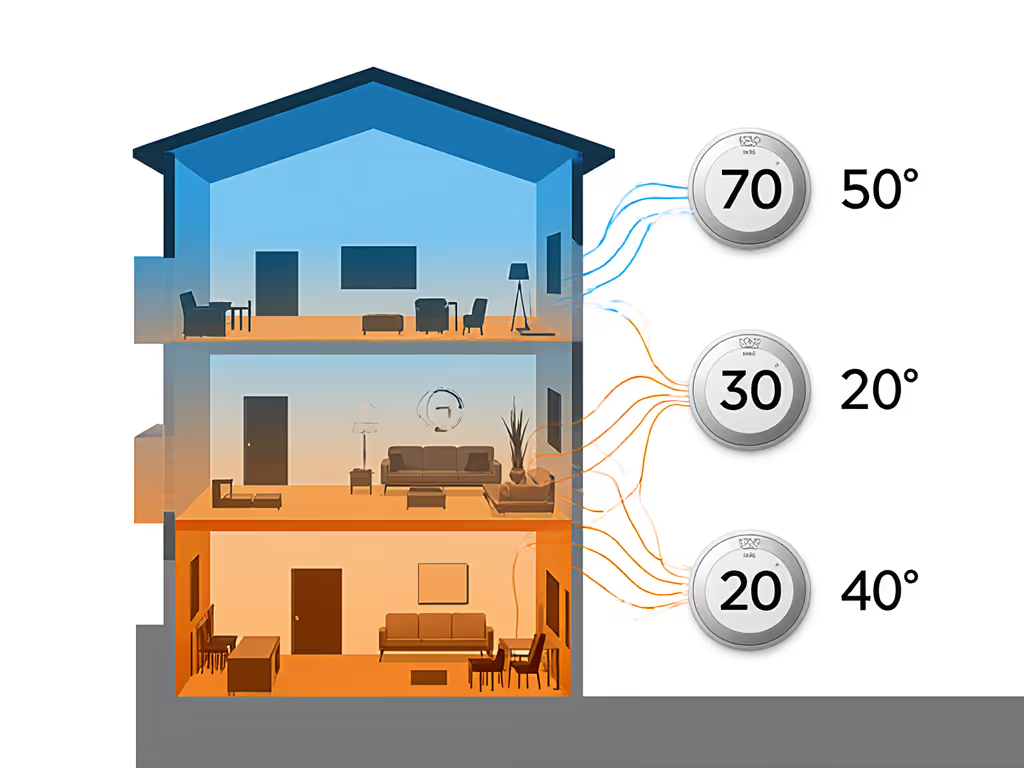
Heat rises, making vertical temperature stratification a natural solution for intergenerational comfort settings. In winter:
- Ground floor: Set to desired temperature for younger adults (70°F)
- Middle floor (seniors' bedrooms): 72-73°F (2°F warmer)
- Upper floor (children's rooms): 68-69°F (2°F cooler)
Summer reverses this pattern, with lower floors running cooler. This approach minimizes equipment runtime while accommodating physiological needs. If your home already has multiple zones, here's how to pick a multi-zone smart thermostat. For homes with three or more stories, reduce the differential to 1°F per floor to prevent excessive HVAC cycling.
Time-Based Scheduling for Peak Comfort
Map shared household climate control to actual occupancy patterns:
- 5-7AM: Warm parents' level for morning routine
- 8AM-3PM: Cooler settings on occupied floors (seniors at home)
- 3-5PM: Pre-cool children's areas before homework time
- 7-9PM: Balanced setting for family time
- 9PM+: Individualized settings by sleeping zone
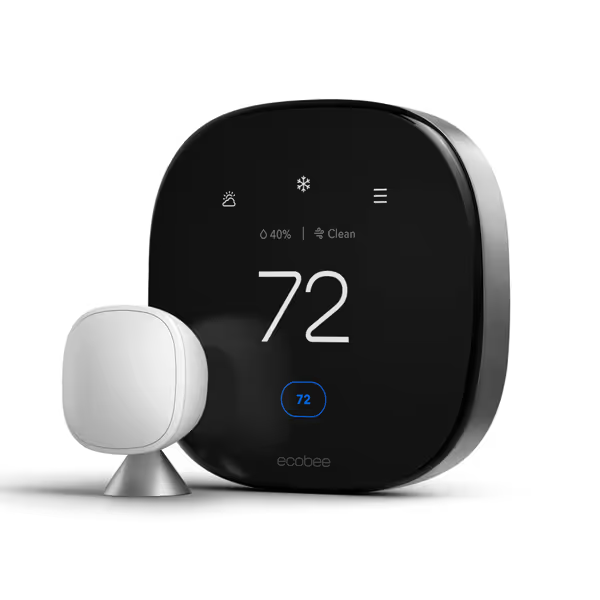
ecobee Smart Thermostat Premium
Smart home hub for comfort, savings, and air quality.
$259.99
HVAC CompatibilityMost 24VAC systems (furnace, AC, heat pump, boiler, PTAC)
HVAC CompatibilityMost 24VAC systems (furnace, AC, heat pump, boiler, PTAC)
Pros
Save up to 26% on energy yearly with SmartSensor included.
Integrated air quality monitor and filter change reminders.
Works with Siri, Alexa, Google Assistant; includes smart speaker.
Cons
Some advanced features require ecobee Smart Security subscription.
Customers find the thermostat easy to install with simple wiring and appreciate its temperature control features, particularly its programmable capabilities. The device integrates well with smart home systems, including Apple HomeKit and Alexa, and customers find it intuitive to use, with vacation settings being easy to set up. The accuracy and temperature adjustment features receive mixed feedback - while some customers report accurate temperature readings, others mention the display is off by about 2 degrees, and some report issues with temperature control.
Customers find the thermostat easy to install with simple wiring and appreciate its temperature control features, particularly its programmable capabilities. The device integrates well with smart home systems, including Apple HomeKit and Alexa, and customers find it intuitive to use, with vacation settings being easy to set up. The accuracy and temperature adjustment features receive mixed feedback - while some customers report accurate temperature readings, others mention the display is off by about 2 degrees, and some report issues with temperature control.
This strategy leverages the Department of Energy's finding that 7-10°F setbacks for 8 hours can yield 10% annual savings. To master advanced programming across irregular routines, see our smart thermostat scheduling guide. But crucially, it maintains comfort during critical usage periods, aligning with my core belief that savings must never compromise essential comfort.
Technology Solutions with Transparent ROI
Modern smart thermostats offering multi-user thermostat profiles can automate these complex schedules, but not all deliver equal value. When evaluating options, consider these critical parameters:
- Clear assumptions list: Does the manufacturer disclose how their 'savings' calculations are derived?
- Override visibility: Are manual adjustments immediately obvious to all users?
A premium thermostat ($220) with remote sensors might save $150 annually through better temperature preferences by age group management. But with a 3-year payback, is it worth it? Consider:
- Dollar figures and payback ranges: $220 investment ÷ $150 savings = 1.47 years (better than typical HVAC ROI)
- Event timelines and rate windows: Critical during utility demand response events
- Sensitivity notes: Savings vary by climate zone (15%+ in temperate zones vs 5% in extreme climates)
Smart sensors that detect room occupancy can prevent heating/cooling empty spaces, a particular advantage in multi-generational homes where usage patterns vary significantly. See which models have the most reliable room presence detection. However, never optimize for prohibited load-shifting that violates your utility program terms. Learn how demand response programs work and what to expect from utility-controlled thermostat events. Always verify demand response parameters before enrollment.
Implementation Roadmap
Follow this sequence to establish effective multi-generational home thermostat management:
- Track a month before you judge: record current runtime and usage patterns To interpret the charts and bills you collect, use our guide to smart thermostat energy reports.
- Identify critical comfort periods for each age group (meals, sleep, morning routines)
- Calculate baseline energy costs using your specific rate structure
- Implement phased adjustments (1-2°F changes weekly)
- Document results with before/after runtime comparisons
Key considerations:
- Maintain minimum safety temperatures (65°F+ for elderly occupants)
- Avoid rapid temperature swings that increase short-cycling
- Ensure all family members understand override procedures
- Verify utility program compatibility before enrollment
The most successful implementations I've analyzed share three traits: predictable savings (verified through actual billing analysis), opt-out mechanisms that require no tech expertise, and comfort protections for vulnerable occupants. When my parents tested different winter profiles, the winning solution was simplest: pre-heat schedules with manual override that maintained comfort while capturing demand response incentives.
Remember that savings should be predictable, opt-out friendly, and never compromise comfort. Your thermostat isn't just a device; it is the interface between family harmony and energy efficiency. Whether you're managing a two-story home with grandparents or a multi-unit property housing three generations, the right temperature strategy balances physiological needs with fiscal responsibility. Start with your household's specific usage patterns, respect biological requirements, and implement changes incrementally. The optimal setting isn't a single number. It is a thoughtful system that serves everyone comfortably.
Track a month before you judge: real savings emerge from observed behavior, not manufacturer claims.
Related Articles