Smart Thermostat Comparison for Allergies: Pollen Tracking
By Erik Müller • 8th Apr
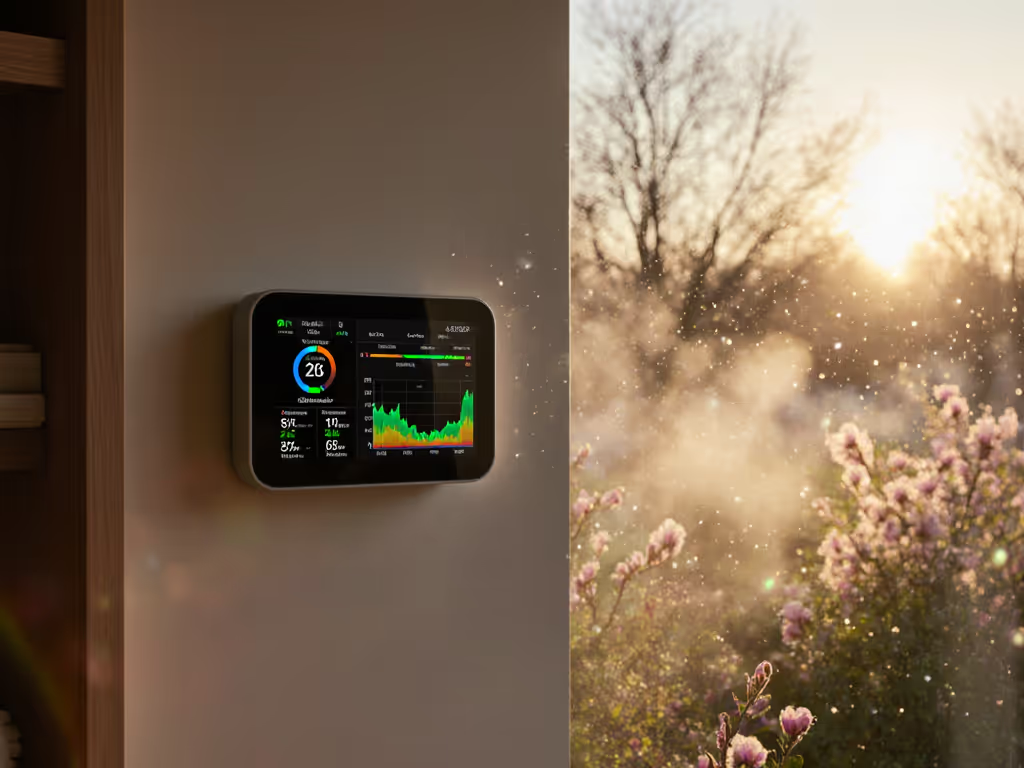
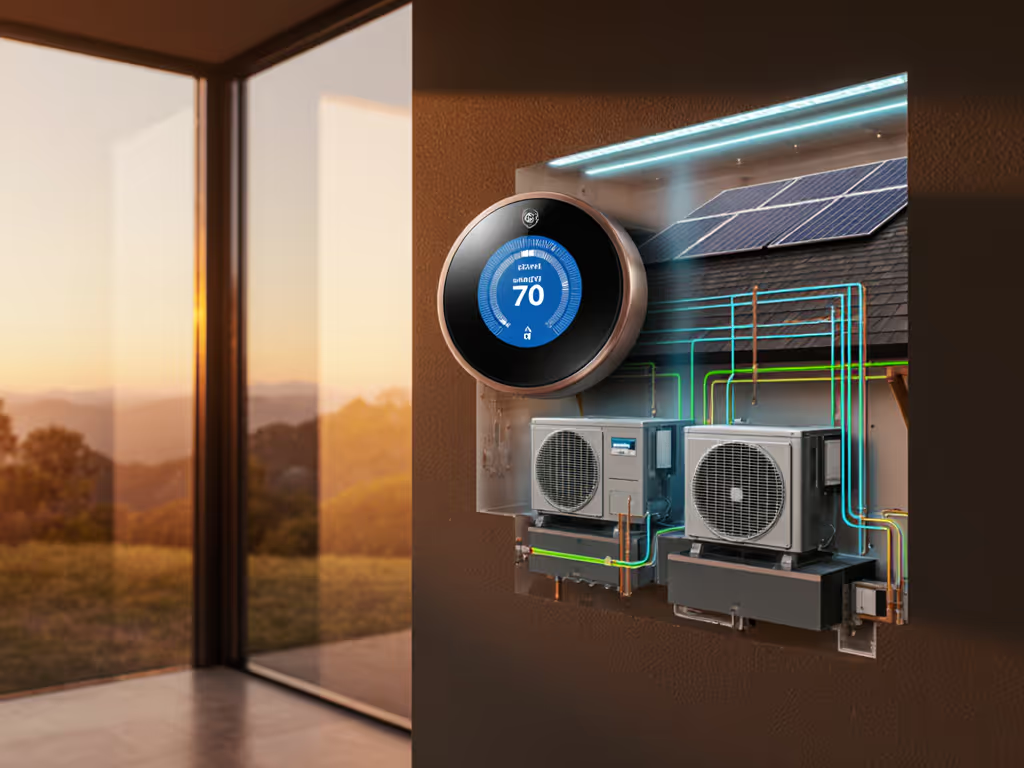
Most discussions of allergy-friendly thermostat comparison focus on temperature setpoints, but comfort during high pollen seasons is about something deeper: runtime consistency, filtration scheduling, and humidity balance. Smart thermostats alone do not track pollen counts from the air, but their scheduling, sensor integration, and ventilation control capabilities can orchestrate the mechanical conditions that reduce indoor allergen exposure, when you understand what each model genuinely offers and how to configure it.
Why Your Thermostat Matters for Allergy Management
A thermostat is the hub for your HVAC system's runtime, staging, and auxiliary equipment. During pollen season, your furnace or air handler needs filter changes more frequently, and humidity swings can worsen dust mite and mold proliferation. The best thermostats do not simply respond to temperature; they allow granular ventilation schedule optimization and sensor-driven adjustments that keep mechanical runtime even and predictable. For a deeper dive into thermostat-based allergy strategies, see our allergy air quality control guide.
When I worked with a partner who suffered from spring allergies, the breakthrough was not a fancier thermostat, it was mapping our runtime and duty-cycle charts alongside pollen reports. We saw that our air handler was cycling erratically, and peak pollen days coincided with longer heating stretches that drew in more unfiltered air during low-demand periods. Once I tightened the deadband and coordinated our filter maintenance schedule with the thermostat's runtime logs, the curve flattened. Symptoms improved because the data showed us where the gaps were.
Current Smart Thermostat Capabilities and Limitations
Today's leading smart thermostats (Google Nest, Ecobee, and Amazon models) offer robust scheduling and sensor coordination, but none natively display or respond to external pollen indices. This is a critical distinction: pollen index monitoring as a true feature remains largely absent from consumer thermostats. However, these devices excel at the mechanical foundations on which allergy management rests.
Google Nest Learning Thermostat (4th Gen) and Allergy Optimization
The Nest Learning Thermostat 4th Gen learns your schedule and adjusts temperature automatically. For allergy management, its value lies in consistent scheduling and the ability to integrate a remote room sensor, which helps detect uncomfortable drafts or uneven air delivery that might correlate with high-pollen days. However, the Nest ecosystem is primarily locked to Google Home, so if you want deeper HVAC air filtration integration with voice commands or routines from other platforms, integration is limited. The thermostat works with 95% of systems, but it does not directly expose filter-change alerts or pollen-responsive scheduling in the app.
Ecobee Smart Thermostat Premium and Multi-Room Sensing
Ecobee's strength for allergy-conscious users is its native support for remote room sensors and compatibility with nearly any smart home platform, including Alexa, Apple HomeKit, Google Assistant, and IFTTT. This flexibility is crucial: if you want to pair your thermostat with a separate air quality or pollen-alert app via IFTTT, Ecobee's open architecture makes this far simpler than Nest's walled garden. Ecobee also comes with a remote temperature sensor in the box, allowing you to monitor and balance airflow to rooms that sit downwind of your HVAC return during pollen season.
The practical allergy benefit: by placing a remote sensor in your bedroom or a closed space, you can confirm that filtered air is actually reaching that zone during high-pollen periods, rather than relying on assumption.
Amazon Smart Thermostat and Alexa Routines
The Amazon Smart Thermostat excels at energy-saving features and displays an Eco Icon reminder when you set conservative setpoints, helpful for maintaining lower cooling during pollen season without losing track of humidity risk. Its tight Alexa integration means you can create voice-triggered routines that adjust temperature and fan speed in response to daily pollen forecasts, provided you build the automation yourself or use a third-party app. Like Nest, it supports 85% of systems, which makes compatibility a bit less universal than Ecobee.
Designing Your Allergy-Responsive HVAC Schedule
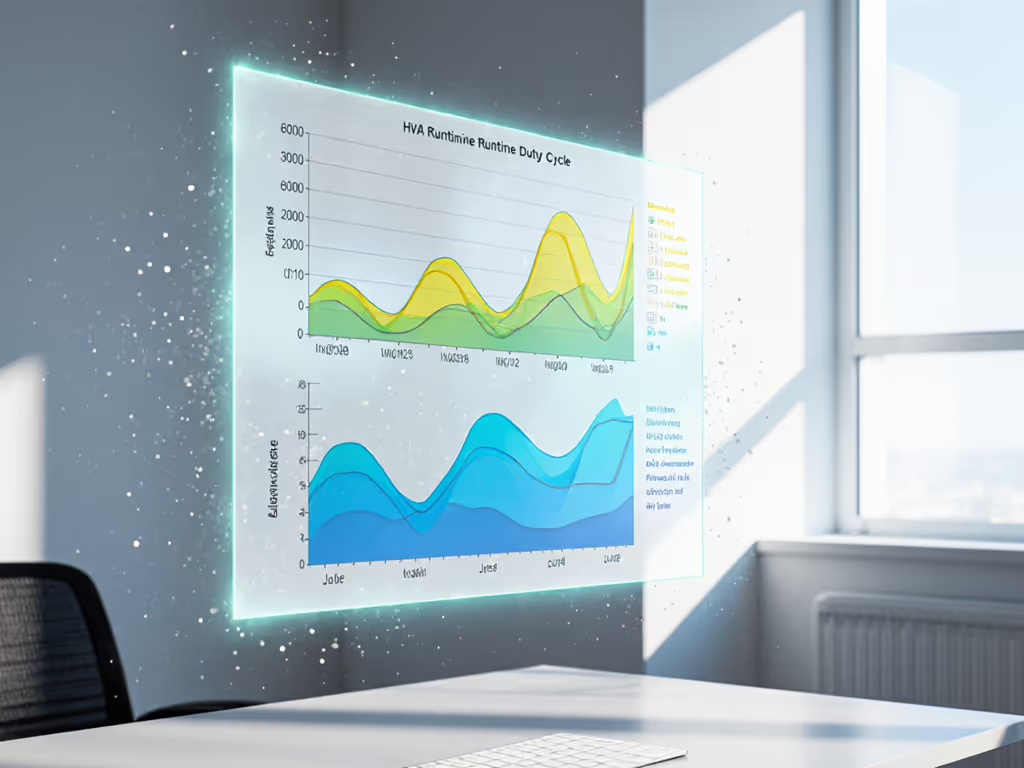
If you want your seasonal allergy climate control to be data-driven and reliable, start by logging your thermostat's runtime and duty-cycle charts. Most smart thermostats can export or display weekly runtime summaries; print or screenshot these during low-pollen weeks (late fall, winter) and again during peak pollen season (spring, early summer in most regions). If you're unsure how to read those charts, our thermostat energy reports guide can help you turn runtime data into clear actions.
Pre-Season Filter Audits and Deadband Tuning
Before pollen season begins, verify your furnace filter is MERV 11 or higher and confirm the filter slot's physical dimensions match your supply. Set a recurring thermostat reminder 30 days prior to your typical peak season; if your system is forced-air (furnace or air handler), a clogged filter increases static pressure and can trigger short-cycling or auxiliary heat lockout errors that degrade comfort and air delivery.
Next, audit your deadband, the temperature swing between heating and cooling. A tight deadband (e.g., 1°F between setpoints) keeps runtime even and avoids the dramatic swings that trigger mold or dust-mite surges in response to humidity spikes. Flatten the curve, then judge: a smooth runtime is quieter, less costly, and more forgiving of pollen and moisture intrusion.
Ventilation Schedule Optimization and Occupancy
Most smart thermostats allow you to set a "ventilation" or "fan" schedule (running the blower even when heating or cooling is off). During pollen season, resist the urge to run the fan continuously; instead, schedule short blower-only bursts (e.g., 10 minutes each hour) during morning and evening hours when pollen counts typically drop. This maintains air circulation without pushing unfiltered outdoor air into your home during peak pollen times.
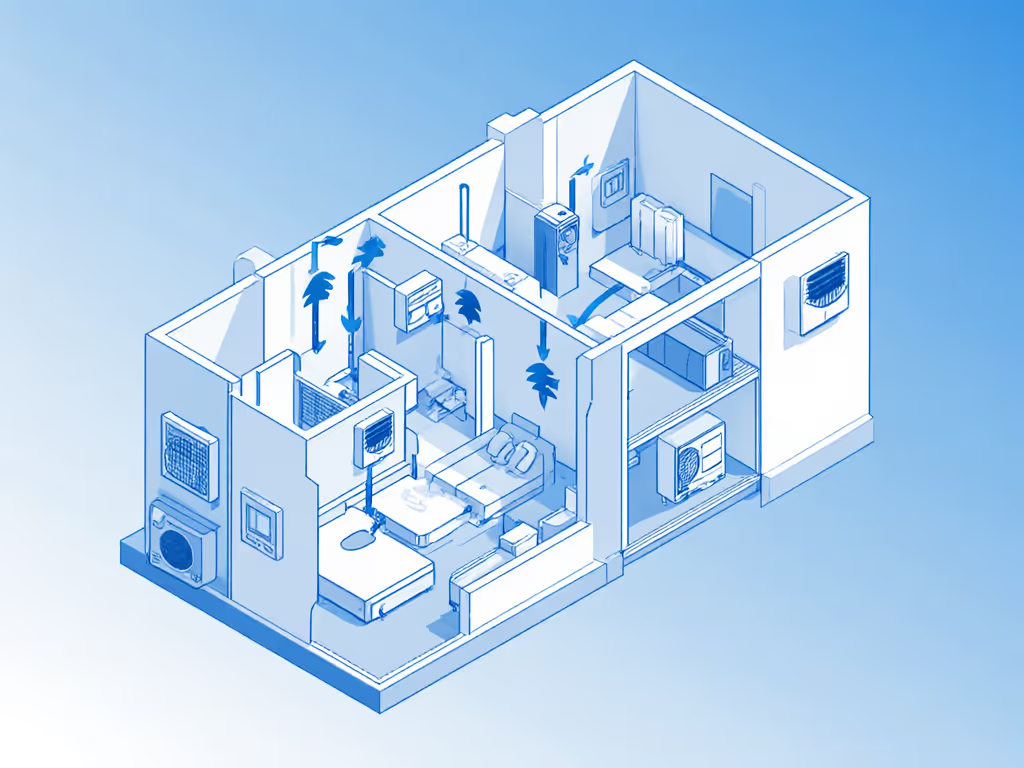
If you have a return-air filter and a fresh-air intake ductwork (ERV or HRV), your thermostat should allow you to control the damper or fresh-air valve independently. For step-by-step ERV/HRV integration with compatible thermostats, follow our ventilation control guide. Ecobee models with Alexa integration are easier to automate this way; Nest requires manual adjustment or third-party cloud integrations.
Sensor Placement for Allergy Monitoring
Remote room sensors are the most underused tool in allergy-aware HVAC control. To choose reliable sensors, see our sensor accuracy comparison. Ecobee includes one in the box; Nest does not, but HomeKit can pair third-party Matter-compatible sensors.
Ideal placements:
- Bedroom: 3-5 feet from the wall, away from direct air vents. Monitors overnight air quality and temperature consistency.
- Home office or gathering space: confirms that occupant zones receive balanced airflow on high-pollen days.
- Hallway near return air: detects unfiltered air infiltration or bypass around closed doors.
During high-pollen days, check your sensor logs. If bedroom temperature is rising 2-3°F above your setpoint while the living room holds steady, you have a blocked return or weak supply duct to that zone. This imbalance is exactly where allergens accumulate, stagnant air allows dust and pollen to settle.
Real-Time Runtime Monitoring and Pollen Season Correlation
No smart thermostat currently pulls pollen data automatically, but you can bridge this gap manually or via automation:
- Subscribe to a pollen alert service from a regional allergen network or a weather app with pollen data.
- Log your thermostat's weekly runtime from the app or via API export (most models support CSV or JSON download).
- Correlate high-pollen days with runtime spikes. If your system is short-cycling (frequent on/off), your filter may be clogged. If runtime is smooth but your symptoms worsen, it likely signals indoor humidity creep (mold or dust-mite activation) rather than fresh outdoor pollen.
- Adjust filter change frequency and deadband accordingly. If a pollen week shows 20% more runtime, move your next filter change up by one week.
This is the before/after comfort delta that matters: not a single graph, but a correlation between mechanical data and your actual experience.
Integration with HVAC Filtration and Air Quality Ecosystems
Smart thermostats do not replace dedicated air quality monitors, but they do interact with them:
- Honeywell and Ecobee models natively support smart humidifiers and dehumidifiers; you can set humidity setpoints and the thermostat will trigger auxiliary equipment during pollen season.
- Nest requires third-party integrations or manual humidifier control; it does not expose humidifier outputs to routines.
- Amazon integrates well with Alexa-compatible humidifiers and air purifiers, making voice control and automation simpler.
For allergy sufferers, the most useful integration is whole-home humidifier control. Indoor humidity below 40% during heating season enables dust-mite population collapse, but overly dry air can irritate nasal passages and reduce natural immune barriers. A smart thermostat that maintains 40-50% RH during high-pollen weeks, then relaxes to 60% in spring when outdoor humidity rises, is far more nuanced than a fixed setpoint. For model-specific wiring and setup, use our whole-home humidifier compatibility guide.
Comparing Compatibility and Future-Proofing
When evaluating thermostats for allergy-responsive operation, prioritize these factors:
- Sensor ecosystem compatibility: Ecobee and Honeywell lead here; Nest is restrictive.
- Scheduler granularity: All three (Nest, Ecobee, Amazon) allow weekly schedules; Ecobee and Honeywell expose more granular hourly options.
- Integration with external air quality platforms: Ecobee and Amazon (via IFTTT and Alexa routines) are most flexible; Nest requires workarounds.
- Filter and maintenance reminders: Most display alerts; Ecobee is most transparent in correlating filter life to runtime.
- Local fallback and privacy: All three rely on cloud apps, but Ecobee and Amazon allow manual override at the unit; Nest does, too, but with less visible granularity.
The Data-Driven Path Forward
True allergy-friendly HVAC control is not about a thermostat "feature" label; it is about consistent runtime, measured filter consumption, sensor-validated room balance, and seasonal deadband tuning. Flatten the curve, then judge: if your runtime and humidity curves are smooth and correlated with your symptoms, you've won.
The best smart thermostat for allergies is the one that integrates with your existing HVAC type (forced-air, heat pump, dual-fuel, or zoned) and your smart-home platform, and that exposes enough data and scheduling precision to let you optimize filter changes and ventilation timing around pollen forecasts. For most homeowners, Ecobee offers the best balance of multi-platform flexibility and sensor coordination; Nest excels if you're deeply invested in Google Home; Amazon is ideal if you want seamless Alexa voice control and routine automation.
Before you buy, export your current thermostat's runtime chart and list your HVAC type, wiring configuration, and which (if any) remote sensors you already own. Then cross-reference the model against your smart-home platform. A misaligned choice will leave you unable to automate the ventilation and humidity adjustments that truly protect you during pollen season.
Further Exploration
To deepen your allergy-aware HVAC strategy, investigate your local utility's demand-response programs, many offer incentives for smart thermostats that shift cooling load to low-pollen hours. Review your furnace filter's MERV rating and actual capture efficiency (ASHRAE reports vary widely). Connect with community forums and Reddit threads dedicated to your thermostat model; experienced users often share automation recipes for seasonal transitions. Finally, consider consulting an HVAC technician about your system's staging logic and whether your current configuration favors short-cycling or excessively long runtimes during high-demand seasons, data-driven adjustments there can reduce allergen stirring more than any thermostat upgrade alone.
Related Articles