Wildfire Air Quality: Thermostat Settings That Protect
By Grace Osei • 2nd Jan
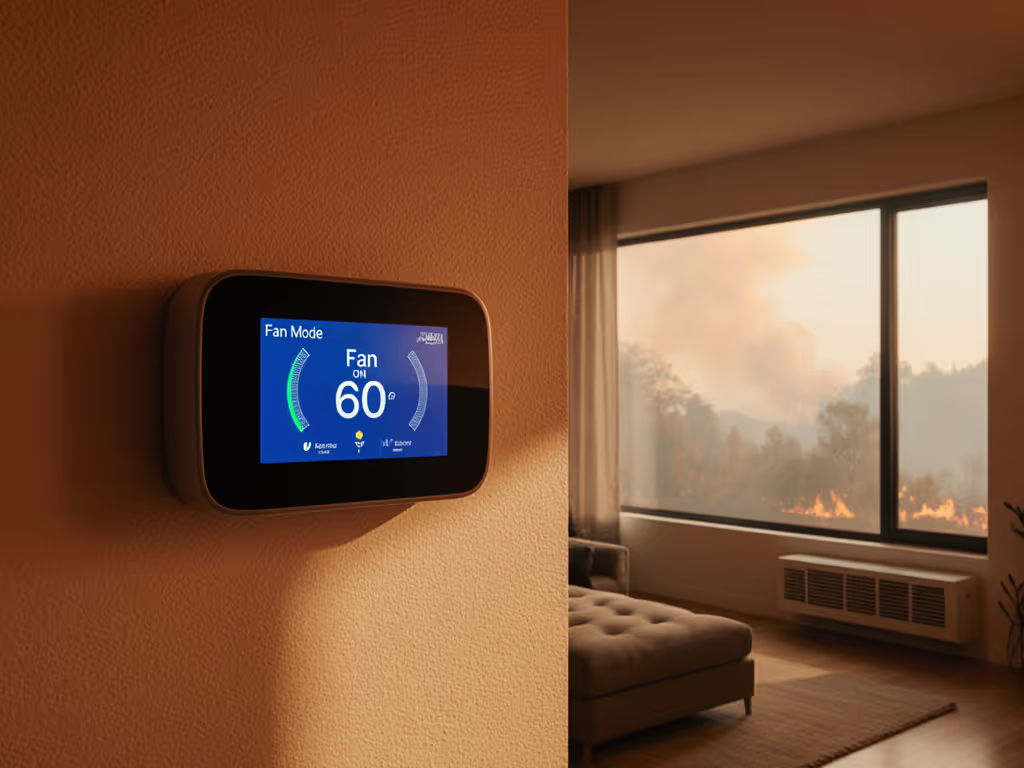
If your home's wildfire air quality thermostat becomes your frontline defense during smoke season, you're not alone. As a property manager who's standardized thermostats across dozens of mixed-equipment buildings, I've seen how the right smoke protection thermostat settings reduce tenant complaints and protect HVAC systems. When outdoor air quality plummets, your thermostat shouldn't just maintain temperature. It should actively filter harmful PM2.5 particles while preventing additional smoke infiltration. Fewer 2 a.m. calls are real ROI you can feel.
Your Quick-Check Compatibility Audit
Before adjusting settings, verify your system's capabilities with this 90-second check:
- Check wiring: Is your C-wire connected? Needed for continuous fan operation
- System type: Forced-air (furnace + AC), heat pump, or radiant? Only forced-air systems offer recirculation
- Filter access: Can you easily replace filters without tools?
- Damper location: Know where your fresh air intake damper is (if present)
- Smart features: Does your thermostat have "Circulate" mode or auto-recirculation during poor air quality?
If you have a Honeywell Home smart thermostat, you'll notice it clearly labels these modes in the fan settings menu, making emergency adjustments straightforward even for less tech-savvy tenants.
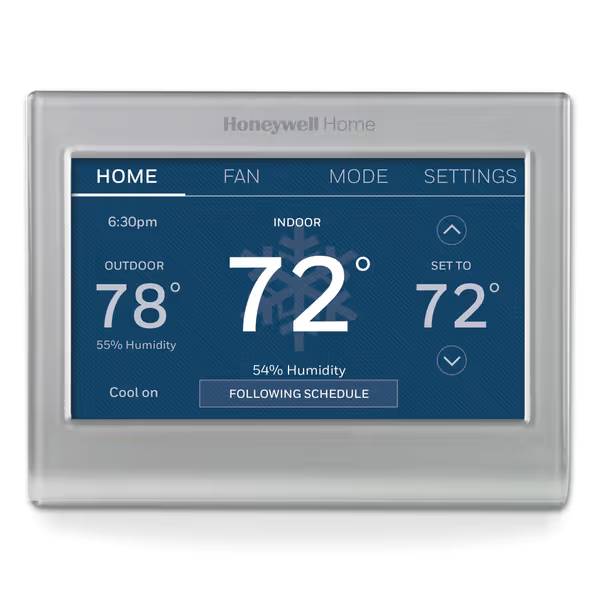
Honeywell Home RTH9585WF1004
Personalized Wi-Fi control, easy savings, and smart home integration.
$134.99
CompatibilityC-Wire required; works with most forced air, hot water, steam, and heat pump systems.
CompatibilityC-Wire required; works with most forced air, hot water, steam, and heat pump systems.
Pros
Personalize screen color to match decor.
Potential utility rebates & demand response rewards.
Easy touch screen, app, and Alexa/Google control.
Cons
Requires C-Wire; not for electric baseboard heat.
Customers find the thermostat easy to install and configure, with a user-friendly app that's simple to see and program. They appreciate its WiFi connectivity, beautiful design, and temperature control features, with one customer noting it can match their mood or decor.
Customers find the thermostat easy to install and configure, with a user-friendly app that's simple to see and program. They appreciate its WiFi connectivity, beautiful design, and temperature control features, with one customer noting it can match their mood or decor.
Step-by-Step Thermostat Protocol for Wildfire Smoke Events
Step 1: Set Fan to "On" or "Circulate" Mode (Critical!)
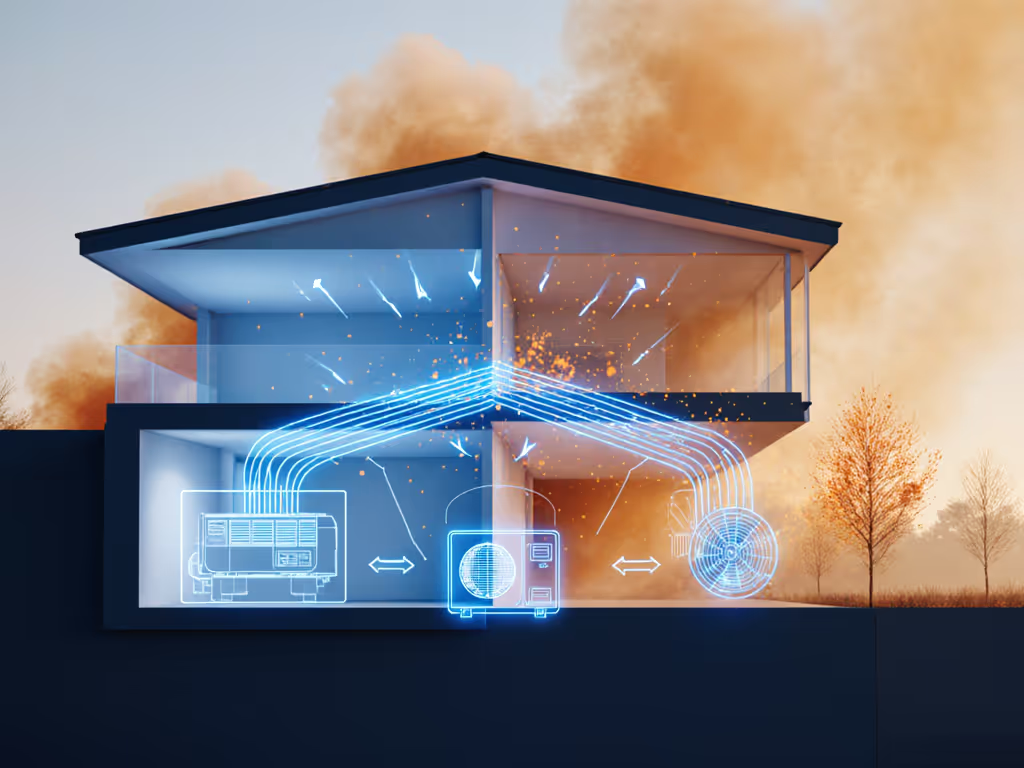
When smoke fills the air, your primary defense is keeping the HVAC fan running continuously to filter particles through your system's filter. This simple action can reduce indoor PM2.5 levels by up to 50%, according to EPA data.
- For smart thermostats: Go to fan settings and select "On" (not "Auto")
- For basic programmables: Set fan switch to "On" position
- For Honeywell models: Navigate to Settings > Fan > Mode > On
The "Circulate" option (available on newer models) runs the fan intermittently, saving energy while still filtering air. During severe smoke events, stick with continuous "On" mode until air quality improves.
Step 2: Close Outdoor Air Dampers
Outdoor air intakes defeat your filtration efforts during smoke events. Here's how to secure them:
- Packaged systems: Locate the outdoor damper near the fresh air intake (usually on the return duct)
- Split systems: Check near the air handler for a manual damper control
- Smart systems: Some thermostats auto-close dampers when poor outdoor air quality monitoring detects wildfire conditions
Step 3: Set Temperature Without Triggering HVAC Cycling
You want continuous air filtration without unnecessary heating or cooling:
- Summer smoke events: Set thermostat 2-3 degrees above current indoor temperature
- Winter smoke events: Set thermostat 2-3 degrees below current indoor temperature
- Moderate seasons: Set thermostat within 1 degree of current indoor temperature
This prevents compressor or furnace cycling while maintaining fan operation. Yes, you'll use slightly more electricity for the fan, but it is far less than the health costs of smoke exposure.
Step 4: Optimize Filter Performance
Your filtration quality depends almost entirely on these two factors:
- Filter rating: Upgrade to MERV 13 during wildfire season (MERV 8-12 for year-round use)
- Filter seal: Ensure no gaps around the filter frame (use foil tape if needed)
Budget breakdowns show that upgrading filters during smoke season costs $5-$15 monthly but prevents $200+ duct cleaning bills from smoke residue buildup. Replace filters every 2-4 weeks during active wildfire events, not the standard 90 days.
Step 5: Create Monitoring & Alert Protocols
Smart thermostats with PM2.5 air quality integration can automatically adjust during emergencies. For wiring and automation specifics, see our air purification integration guide to tie PM2.5 readings to fan control. For basic models:
- Subscribe to local AirNow alerts
- Set phone reminders to check fan status twice daily
- Program a "smoke event" schedule that locks fan to "On"
Tenant-Proof Settings for Property Managers
My 12-unit conversion taught me that the right thermostat settings must survive tenant "adjustments." Here's what sticks:
- Lockout steps: Engage thermostat lockout to prevent fan mode changes (most models allow fan "On" but prevent temperature adjustments)
- Clear override features: Maintain a visible printed guide showing how to temporarily disable lockout
- Label key settings: Place red tags near thermostats: "FAN STAYS ON DURING SMOKE EVENTS"
- Maintenance tips: Schedule filter checks during smoke season, don't wait for complaints
Standardize where you can, label as "emergency protocol" near thermostats. For buildings with many units, see our multi-unit thermostat management guide for centralized controls and tenant lockouts. This simple visibility prevents well-meaning tenants from switching fans back to "Auto" during critical smoke events.
Smart Home Wildfire Protection Integration
For owners with platform ecosystems, maximize smart home wildfire protection with these automations:
- AirNow + Smart Thermostat: Create a routine where PM2.5 levels above 50 trigger fan "On" mode
- Geofencing: When all residents leave during smoke events, activate "Shelter Mode" with fan "On" and closed dampers Set it up step-by-step with our smart thermostat geofencing guide.
- Voice control: "Hey Google, activate smoke protection mode" sets fan to "On" and closes compatible dampers
These integrations form part of intelligent wildfire season climate control that works without constant manual intervention, which is critical during fast-moving fire events.
What NOT to Do During Smoke Events
Avoid these common mistakes that worsen indoor air quality:
- ❌ Running AC in "Auto" fan mode (cycles air only when heating/cooling)
- ❌ Using window AC units with open outdoor dampers
- ❌ Installing UV lights without proper particle filtration first
- ❌ Setting thermostats to extreme temperatures to "push" air filtration
Actionable Next Step
Before fire season hits, complete this 10-minute thermostat readiness checklist:
- Verify your system has a working C-wire for continuous fan operation
- Locate and label your outdoor air damper
- Stock MERV 13 filters sized for your system
- Program a "Smoke Event" fan setting on your thermostat
- Create printed instructions for tenants/family
During the next air quality advisory, you'll spend minutes rather than hours troubleshooting, protecting both your lungs and your HVAC system. Remember: when smoke rolls in, your thermostat becomes your first line of defense. Get it right once, and breathe easier through wildfire season.
Related Articles