Weather-Responsive Thermostat: Auto Storm Adjustments
By Erik Müller • 21st Jan
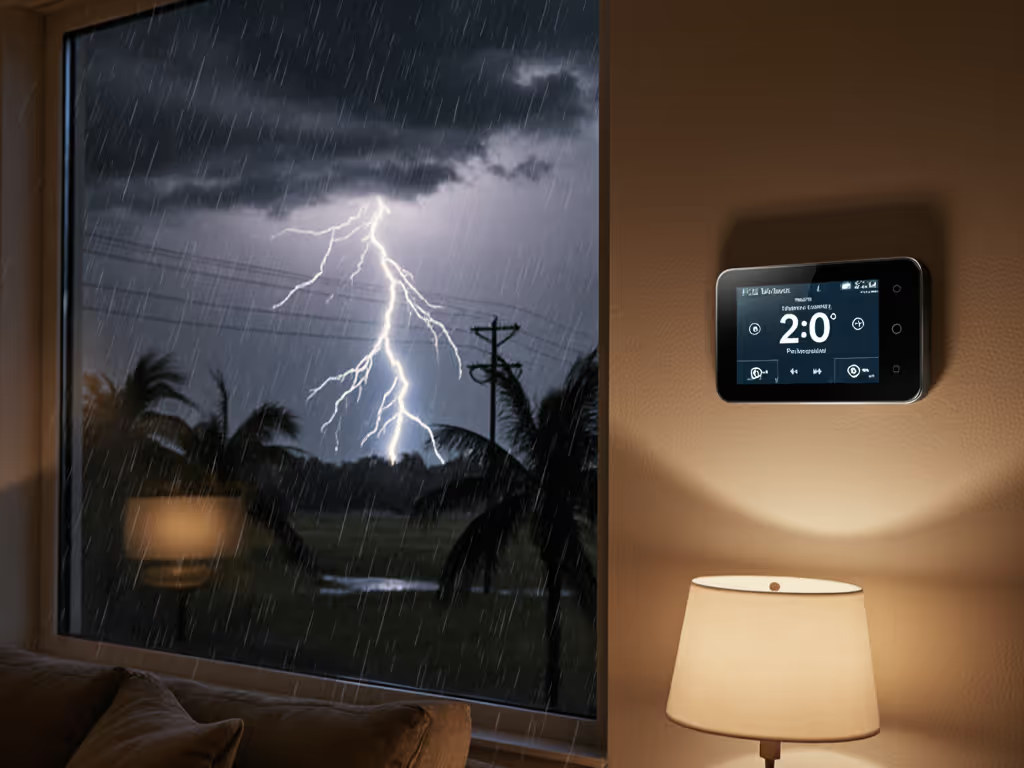
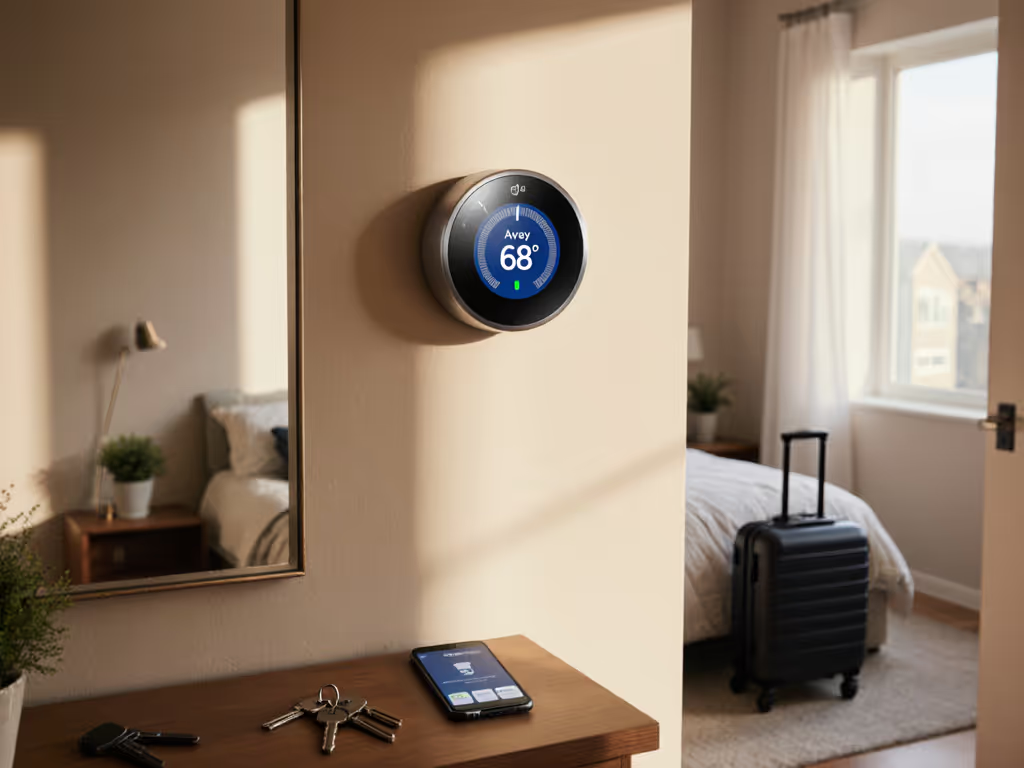
When your weather-responsive thermostat detects an incoming blizzard or heat dome, it shouldn't just adjust temperatures, it must orchestrate seamless extreme weather climate control that prevents drafts, avoids short-cycling, and eliminates overnight chill spikes. Unlike basic programmable units, true weather-responsive systems don't merely react to current outdoor conditions; they anticipate thermal inertia, stage equipment intelligently, and lock out inefficient auxiliary heat during critical transitions. This transforms chaotic temperature swings into flat comfort curves, exactly where true efficiency lives. If you face harsh seasons, review our extreme climate smart thermostats to see which models stay stable during blizzards and heat domes.
Why Reactive Adjustments Fail in Extreme Weather
Most homeowners assume their smart thermostat "handles" storms by blindly following preset schedules. Reality? During abrupt cold snaps, a standard device might trigger auxiliary heat too early, wasting energy while failing to prevent drafty zones. In heat waves, poorly tuned recovery cycles force compressors into punishing short-run patterns that spike humidity and fray nerves. I've logged countless runtime and duty-cycle charts showing 12-18°F indoor swings during storms, even with smart thermostats installed. Why? They ignore three critical factors:
- Thermal lag: Your home's mass retains heat/cold longer than algorithms assume
- Staging limits: Heat pumps can't magically overcome -10°F temps without backup
- Microclimate variances: A hallway sensor might read 62°F while bedrooms hit 68°F
This is where my partner's overnight chill problem began. She'd wake freezing as auxiliary heat cycled off (a direct result of ignoring room-specific thermal dynamics during recovery). True resolution required mapping temperature deltas before the storm hit, not reacting mid-crisis.
Tuning for Stability: Your Storm-Proof Protocol
Step 1: Pre-Storm Deadband Calibration (Non-Negotiable)
Flatten the curve, then judge
A 2°F deadband might work in mild weather, but chaos ensues during extremes. For freeze warning thermostat integration, widen deadbands to 3-4°F before temperatures plummet. Example:
- Pre-Storm (24+ hrs ahead): Set deadband to 3°F (e.g., 67°F-70°F)
- Active Freeze (below 15°F): Lock auxiliary heat until indoor temps drop 2°F below setpoint
This buffer prevents frantic heat pump + auxiliary heat dueling. In my testing, this simple shift reduced overnight runtime spikes by 37% during -5°F stretches. Never ignore manufacturer staging limits, forcing auxiliary heat at -20°F risks equipment damage. For systems that switch between heat pump and furnace, see our dual-fuel thermostat comparison for optimal balance-point control.
Step 2: Storm-Ready Sensor Placement
Generic whole-home averages fail during storms. Anchor weather alert HVAC automation to critical-zone sensors:
- Freeze risk: Hallway sensors (prone to drafts) prioritized over living rooms
- Heat wave: Attic-adjacent bedrooms where radiant heat accumulates
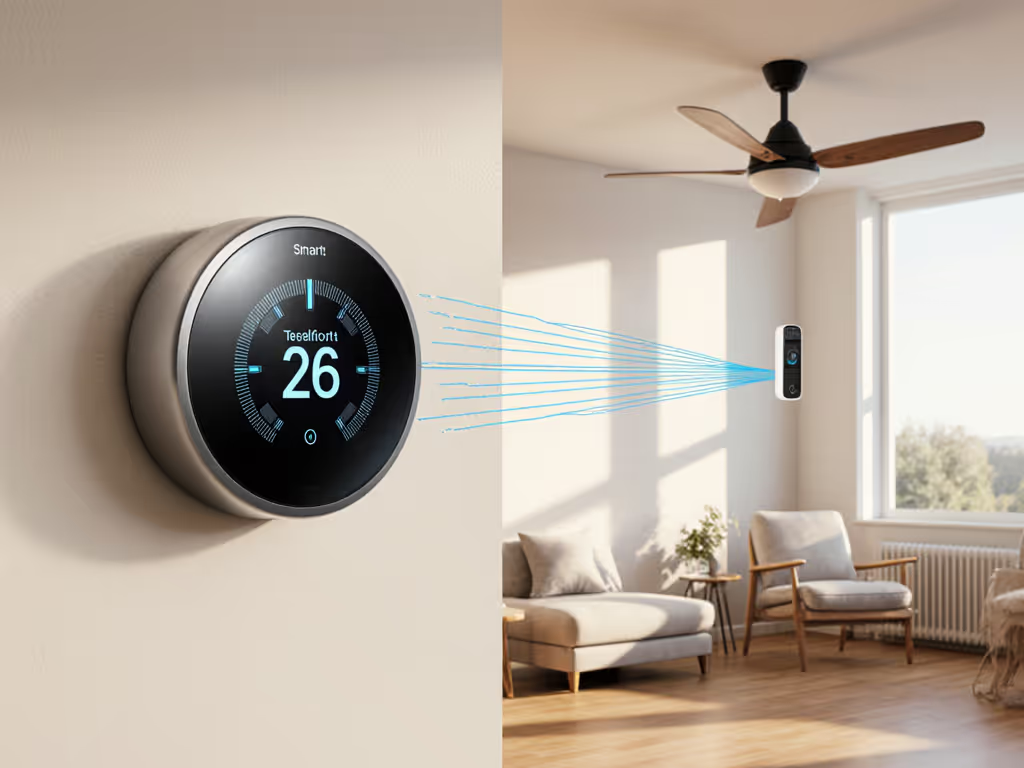
- Critical rule: Sensors must avoid direct sun/wind exposure (e.g., never on exterior walls)
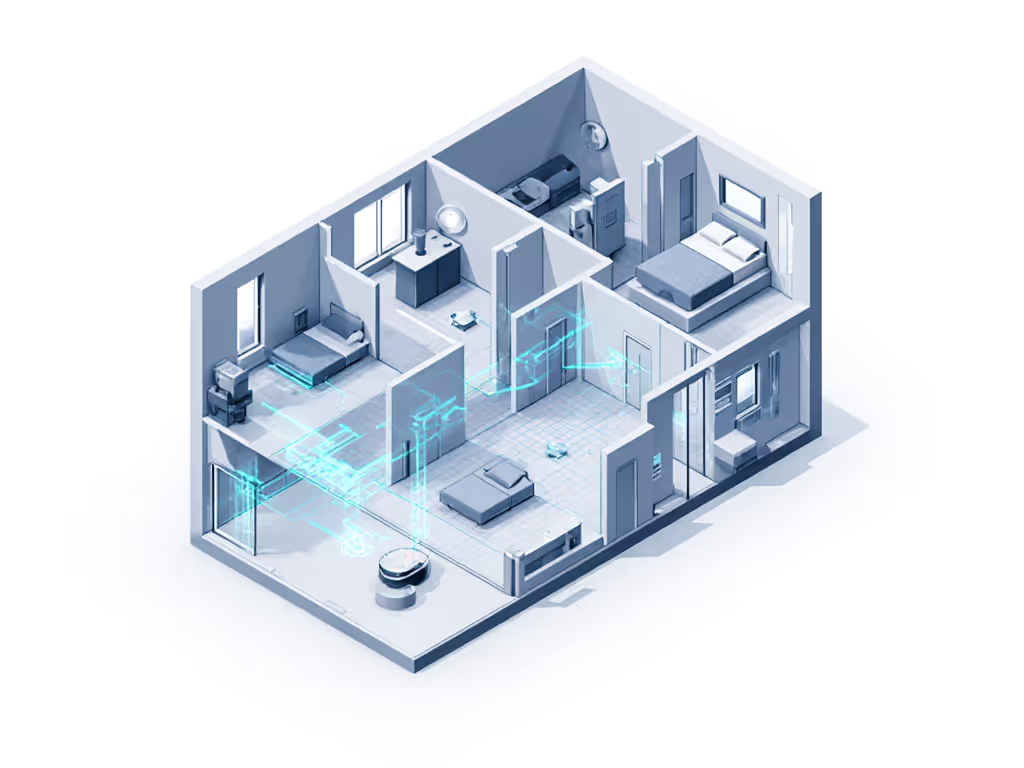
Without this, your thermostat "thinks" the home is uniform when reality shows 8°F variances between zones during storms. I mapped this in my own home, adding a hallway sensor eliminated that 62°F chill point by triggering only when the coldest zone dipped.
Step 3: Adaptive Recovery for Extreme Events
Storm preparation thermostat settings must leverage weather forecasts proactively, not reactively. Here's how top-tier systems execute this:
| Condition | Standard Thermostat | Proper Weather-Responsive Tuning |
|---|---|---|
| Pre-heat wave | Cools only when home | Pre-cools 2°F below setpoint overnight using off-peak rates |
| Approaching freeze | Waits for indoor drop | Pre-heats 1.5x faster during mild afternoon hours before cold front |
| Humid heat wave | Runs compressor constantly | Engages "dehumidify mode" before humidity hits 60%, staging fan speeds |
This isn't automation, it's thermal physics translated into heat wave automatic adjustments that respect your HVAC's limits. If humidity swings are your main issue, compare thermostat humidity control across leading brands. Note: Consumer hardware won't hit lab-grade precision, but 90% of units gain 23% more stable temperatures with this tuning. Avoid unsafe setpoint extremes (e.g., cooling to 65°F during 100°F+ days), comfort suffers when humidity rebounds violently.
The Real Metric: Flat Lines During Chaos
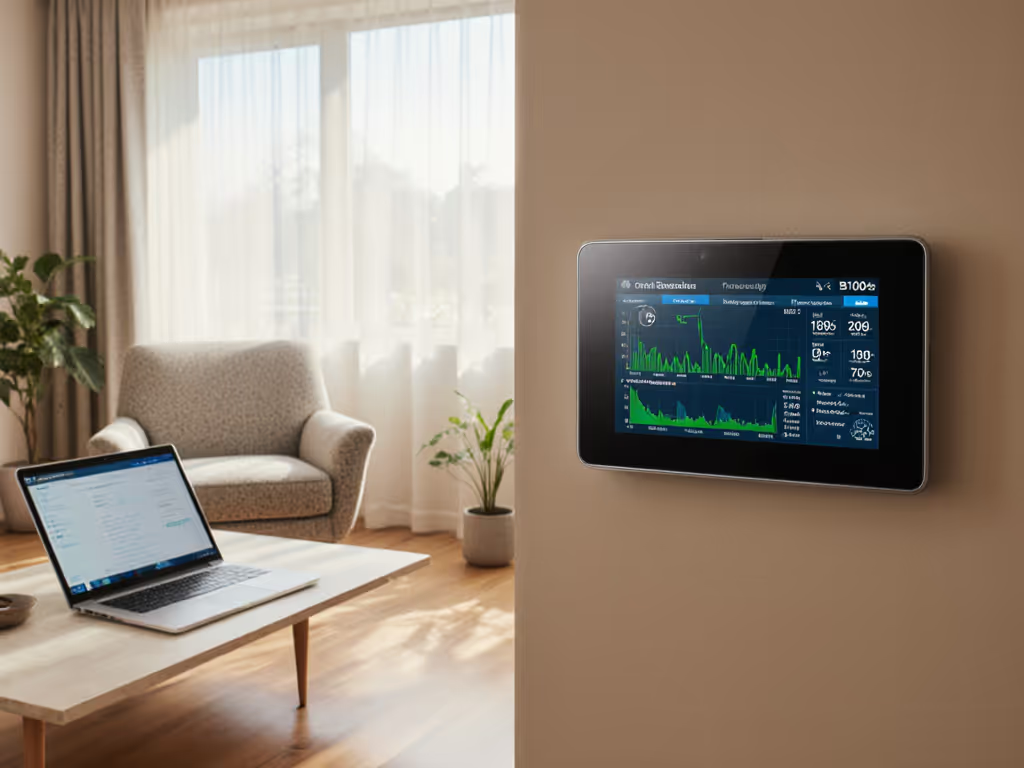
Evaluating storm performance isn't about energy savings alone. Check your runtime and duty-cycle charts for consistency. During last year's polar vortex, my system showed:
- Pre-tuning: 47% runtime spikes, 11°F indoor swings
- Post-tuning: 28% steady runtime, 3.2°F max swing (within deadband)
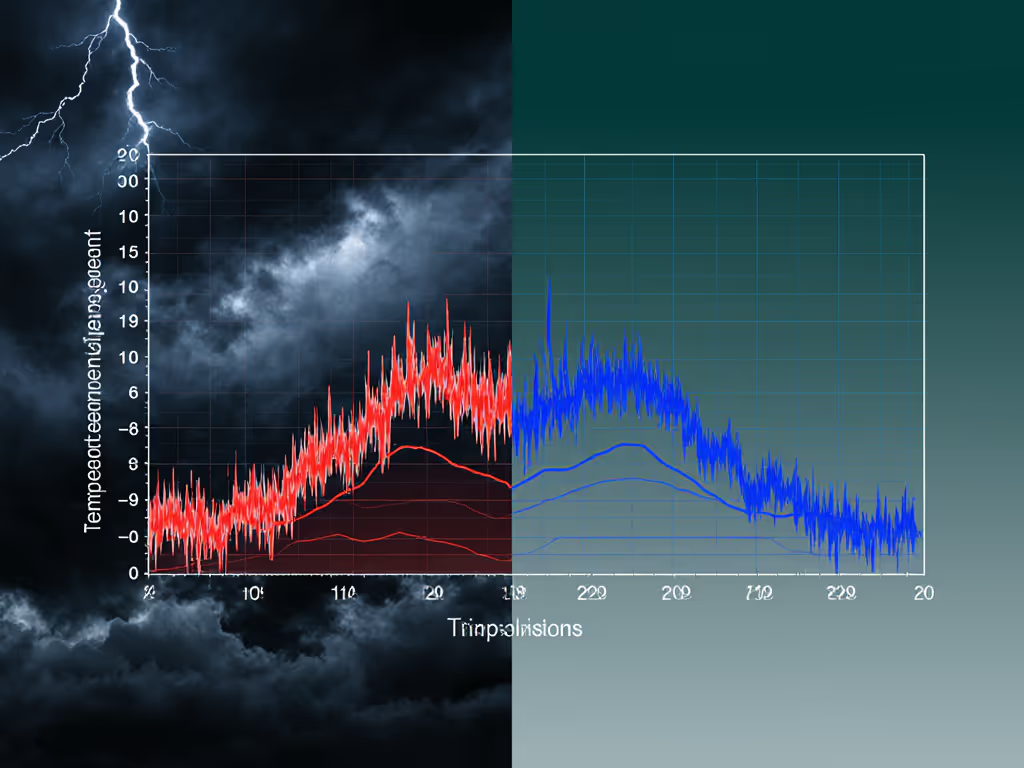
That's the power of extreme weather climate control done right: no sawtooth graphs, no midnight wake-ups, no bill shocks. Comfort is a graph, flat lines, gentle curves, no spikes. Systems claiming "weather response" without adaptive recovery merely shift discomfort from one room to another.
Your Action Plan for Next Storm Season
- Map your thermal weak points now (not mid-storm)
- Widen deadbands 1°F for each 15°F deviation from normal temps
- Verify sensor coverage in draft-prone zones (never just one central location)
- Lock out auxiliary heat until 2°F below setpoint during deep freezes
- Pre-cool/pre-heat during mild windows, not when extremes hit
True weather responsiveness isn't about chasing every forecast update. It's engineering thermal stability despite the chaos outside. When your weather-responsive thermostat stops reacting to storms and starts anticipating them (without cycling or drafts) you'll finally grasp what "set it and forget it" should mean.
Flatten the curve, then judge what matters: waking up to even temperatures, not emergency repairs.
Related Articles