Thermostat Health Monitoring: Detect Respiratory Issues
By Erik Müller • 20th Apr
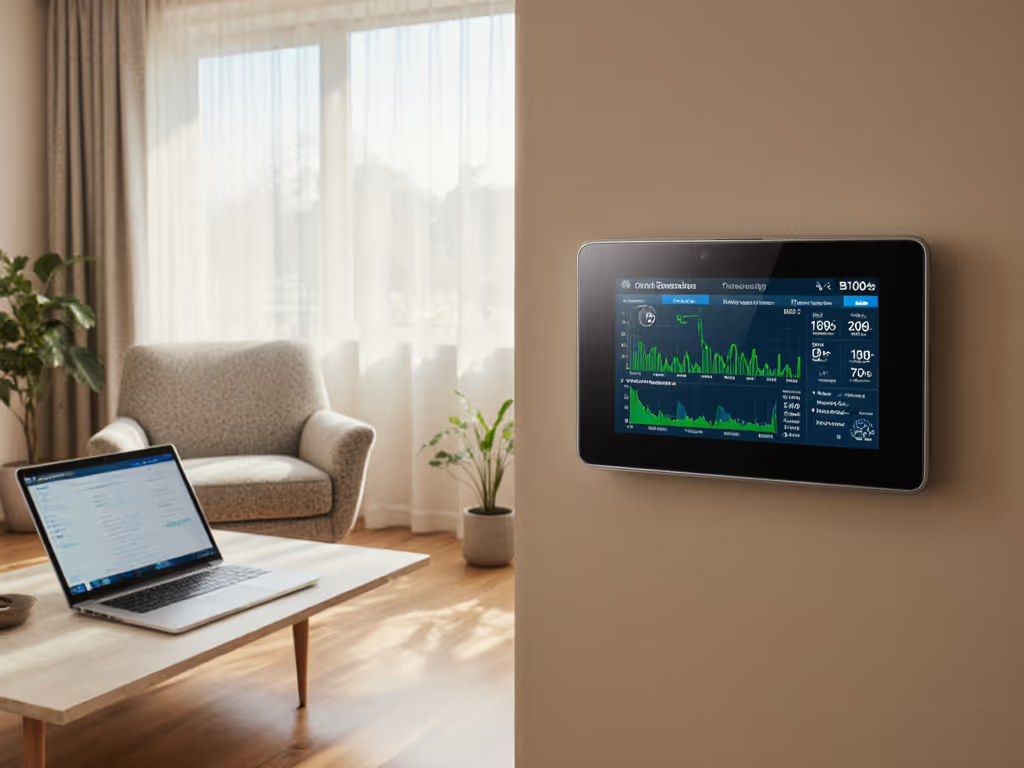
Your thermostat does far more than keep your home at a comfortable temperature. When equipped with health-aware sensors and logging capabilities, thermostat health monitoring integration becomes a quiet sentinel for indoor air quality, one that can reveal patterns linked to asthma, allergies, COPD, and other respiratory sensitivities. Understanding how respiratory health climate tracking works, and how it differs across thermostat models and sensor strategies, helps you make an informed choice about whether this layer of monitoring aligns with your family's needs.
The Hidden Connection Between Climate and Respiratory Health
Respiratory triggers are seldom obvious in real time. A person with asthma might feel fine in the morning, then struggle to breathe at night, without suspecting that the culprit was a cascade of humidity, temperature swings, and stale air hours earlier. Smart thermostats that log and analyze indoor climate health indicators can help you spot these patterns retrospectively (not as medical diagnostics, but as actionable environmental clues).
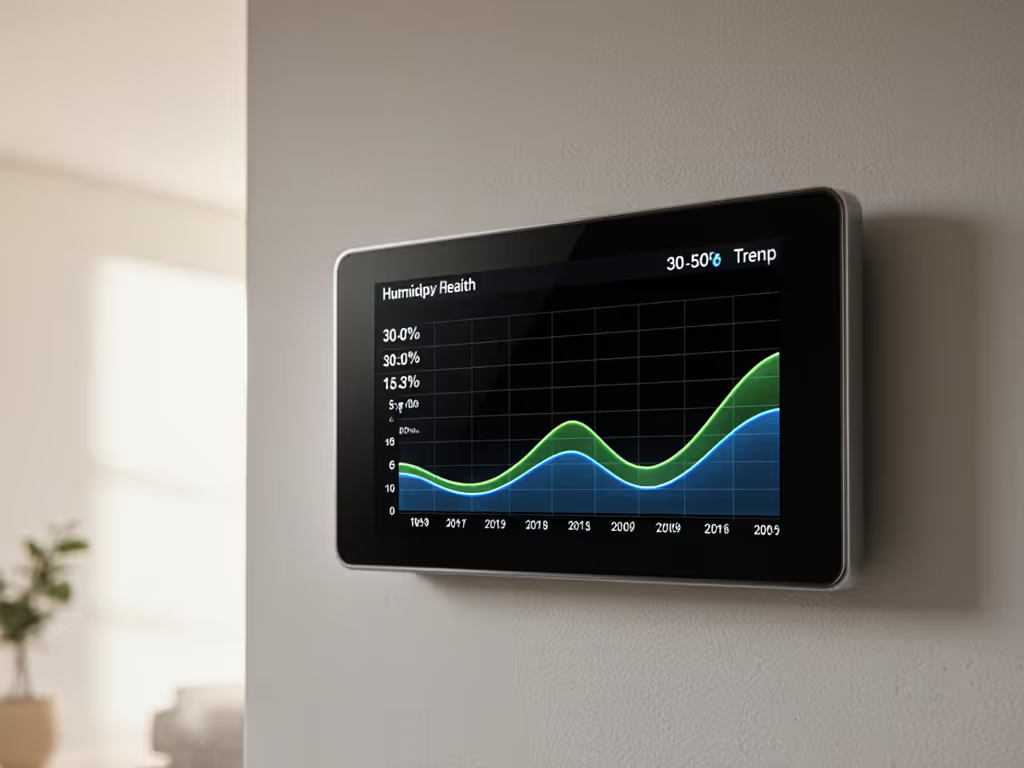
The science is straightforward. A humidity level between 30 and 50 percent represents a healthy middle ground; drier air triggers asthma and respiratory irritation, while overly humid air fosters mold and bacteria growth. For a deep dive into model-by-model capabilities, see our humidity control comparison. Similarly, temperature consistency matters: frequent short cycling, where your heating or cooling system turns on and off erratically, stirs up dust and can destabilize the microclimate in the room where someone sleeps or spends hours working. When a thermostat logs runtime and duty-cycle charts over weeks, you can see whether your setpoint is too aggressive, whether auxiliary heat is kicking in unnecessarily, or whether a drafty hallway is pulling cold air into your core living space.
Traditional thermostats show you only the setpoint and the current temperature. Modern thermostats with integrated health monitoring show you the story: the humidity curve, the compressor runtime, the sensor placement strategy, and the before/after effect of a tuning adjustment.
Comparing Thermostat Monitoring Approaches
Smart thermostats differ significantly in how, and how deeply, they track indoor climate health indicators. Three approaches dominate the market:
Built-in Humidity Sensors The most direct method. A thermostat with an integrated humidity probe continuously measures relative humidity (RH) in the room where it's mounted. That sensor data feeds into a logging database accessible via the thermostat's app. Over time, you can see whether your home drifts toward dry winters or damp summers, and whether running a humidifier or dehumidifier actually changes the dial. Some models, like those from Carrier and American Standard, allow you to pair your thermostat with whole-home humidification systems and coordinate them automatically. The advantage: immediate feedback and closed-loop control. The drawback: the thermostat measures only the room where it's mounted, not the bedroom hallway or the bathroom where mold lurks, or the basement where radon might collect.
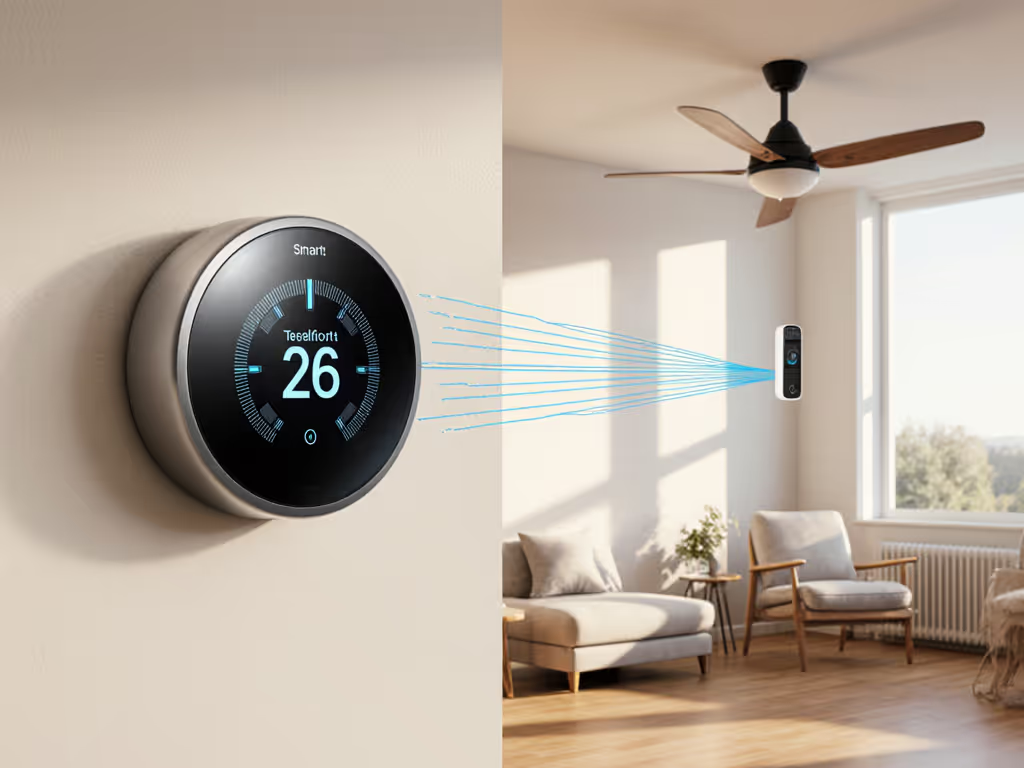
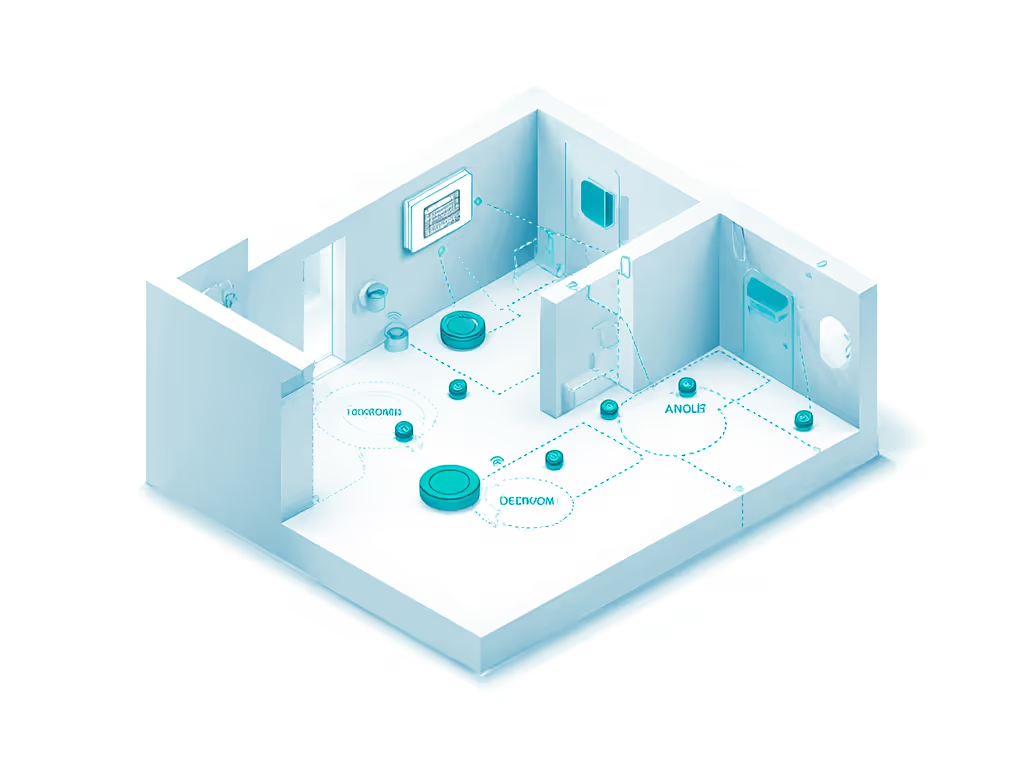
Multi-Sensor Ecosystems Premium smart thermostat ecosystems allow you to install remote room sensors, often placed in bedrooms, home offices, or drafty areas, that relay temperature and humidity back to the central thermostat. The thermostat then logs data from all sensors, not just its own. This approach is more expensive upfront but far more revealing. A person sensitive to cold drafts can place a sensor in the hallway or a south-facing bedroom and track whether that zone stays stable or swings by 5-10 degrees overnight. A parent concerned about asthma in a child's bedroom can watch the humidity curve in that specific room and correlate it with cough frequency or sleep quality. The challenge: not all thermostats support remote sensors, and those that do often require proprietary hardware or additional subscriptions.
Air Quality and Occupancy Monitoring Some advanced thermostats integrate broader air quality tracking: carbon monoxide (CO) detection, volatile organic compound (VOC) sensing, or occupancy awareness. If allergies are a top concern, explore our guide to smart thermostat air quality control. A thermostat that knows when you leave home and when you return can avoid heating or cooling empty rooms, reducing duty cycles and dust circulation. One that alerts you when CO levels rise can flag a dangerous furnace condition before it becomes critical. These systems log events and alert patterns, not continuous graphs, but event markers that prompt investigation.
Detecting Asthma Triggers and COPD Environmental Factors
Asthma trigger detection requires sustained attention to three climate variables: humidity, temperature consistency, and air movement.
When you log humidity over a month, you can ask: Does my home drop below 30 percent in winter, drying out sinuses and airways? Does it spike above 50 percent in summer or after showers, risking mold? Does it fluctuate wildly hour to hour, a sign that your humidifier is too strong, or your dehumidifier is over-correcting? A thermostat that trends this data helps you answer. If you notice that asthma symptoms spike on mornings after very dry nights, you can adjust your humidifier setpoint and re-measure; if the curve flattens and mornings improve, you've created a testable intervention backed by data.
COPD environmental monitoring adds another layer: awareness of extreme temperature swings, air circulation, and pollutant exposure. COPD sufferers often react poorly to cold air or to rapid heating cycles that stir up particles. A thermostat with adaptive recovery, one that gently preheats or precools a room instead of slamming the setpoint up or down, can reduce those shocks. Logging the temperature curve and measuring the gradient (how fast the temperature changes per hour) lets you tune the system to eliminate spikes. Some thermostats flag when compressor cycling becomes erratic, a sign that filter maintenance is overdue or that airflow is blocked. These alerts, combined with humidity and temperature logs, create a health profile: comfort is a graph, flat lines, gentle curves, no spikes.
The Role of Sensor Placement and System Staging
A thermostat mounted on an exterior wall or above a heating register gives a distorted picture of your home's true climate. Remote sensors in bedrooms, home offices, and hallways (especially drafty or cold zones) reveal the real comfort distribution. When you see that your thermostat setpoint reads 70 °F but a hallway sensor shows 64 °F, you've found a problem that no thermostat adjustment alone can solve; you need better insulation, ductwork balancing, or auxiliary heating strategy.
Thermostats that support auxiliary heat lockout are particularly valuable for respiratory health. In a heat pump system, a malfunctioning thermostat might call for strip heat or auxiliary heat too frequently, creating temperature spikes and short cycles that stir dust. A well-tuned thermostat with proper staging limits (set via the manufacturer's specifications, never exceeded) allows the heat pump to run longer and more smoothly, keeping the temperature curve gentle and reducing indoor air movement. This is the inverse of the marketing hype around "fast heating"; respiratory comfort, especially for those with asthma or COPD, often means slow, consistent heating, not fast.
Health Data Privacy and Thermostat Monitoring
The most sophisticated thermostat systems collect highly personal data: when you sleep, when you're away, your indoor humidity levels, your HVAC runtime patterns, and even occupancy history. This information is valuable to your HVAC technician (for diagnostics), your utility company (for demand response programs), and unfortunately, to data brokers if your privacy is not protected.
Health data privacy thermostat concerns center on three questions: Where is your data stored? Who can access it? Can you opt out without losing core features?
Some thermostats offer local logging: your data stays on a local hub or gateway, never uploaded to the cloud. For practical steps to secure devices and data, see our smart thermostat privacy guide. Others require cloud storage but allow you to disable occupancy tracking. A few offer transparent data-sharing disclosures and let you choose which features are cloud-dependent. Before choosing a thermostat for health monitoring, review the manufacturer's privacy policy and app settings. If you cannot disable cloud upload or occupancy logging, or if the policy is vague, that system may not be appropriate for respiratory health tracking if you value privacy.
Building Your Before-and-After Comfort Profile
The practical value of thermostat health monitoring emerges when you use it iteratively: measure your baseline, make a change, then measure the result.
Start by logging your home's temperature and humidity curves over two weeks without any adjustments. Export or screenshot the data so you have a baseline. Then, identify one likely respiratory trigger, perhaps your home is too dry in winter, or the bedroom gets too warm at night. Adjust one variable: increase humidifier setpoint, lower the bedroom setpoint by 2 degrees, or add a remote sensor to a cold zone. Log another two weeks and compare. Did the curve flatten? Did symptoms improve? If yes, keep the change. If no, revert and try another.
This measurement-led approach reflects the reality of respiratory health: comfort is not a feeling alone, it is a graph, one you can plot, analyze, and optimize. A thermostat that gives you access to that graph, with intuitive trending and export options, becomes a tool for diagnosis and prevention, not just convenience.
Next Steps: Evaluating Your System and Options
If respiratory health monitoring aligns with your home's needs, your next step is to map your specific setup: the type of HVAC system (heat pump, furnace + AC, boiler, or hybrid), the presence of humidification, the number of zones, and the rooms where symptoms are most acute. Cross-reference this profile with thermostat specifications (particularly sensor support, logging granularity, data privacy controls, and compatibility with your existing smart home platform). Consumer publications often review the top-rated models in your region and climate zone; seek reviews that prioritize comfort consistency and sensor ecosystems over flashy automation features. If you have an existing smart thermostat, log into the app and review your historical data; if the app offers rich trending and export, that system may already support health monitoring. Need help interpreting those charts? Start with our smart thermostat energy reports walkthrough. If not, upgrade decisions can be informed by a clear feature comparison: which models offer local humidity logging, remote sensor support, and data privacy controls that match your comfort and privacy needs. Start small (one baseline measurement) and let the data guide your choices.
Related Articles