Energy Trading Thermostats: Optimize Real-Time Pricing
By Mateo Alvarez • 7th Feb
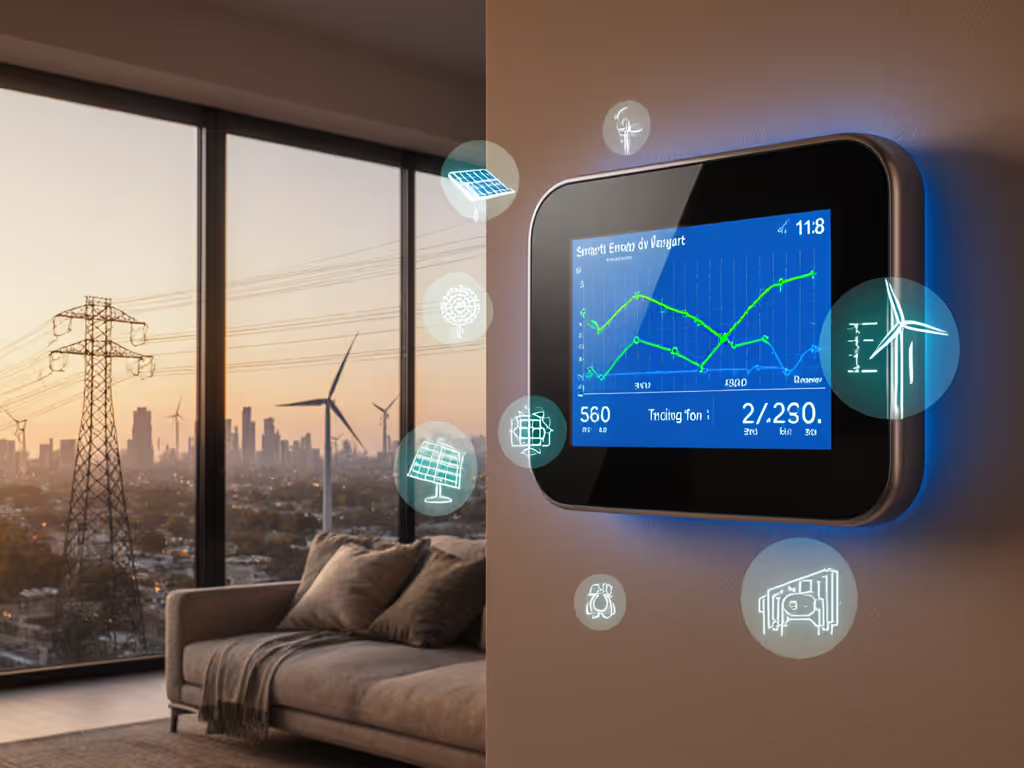
When your utility shifts to dynamic pricing models, a standard smart thermostat often becomes just another energy expense rather than a savings tool. Energy trading thermostat systems that integrate with your national grid smart thermostat program create a fundamentally different value proposition: they transform your HVAC from a passive consumer into an active participant in the energy market. These advanced systems don't just automate temperature control; they analyze pricing signals, forecast renewable availability, and execute strategic load shifts while preserving comfort. For homeowners enrolled in real-time pricing programs, this capability shifts the ROI calculation from simple convenience to measurable bill reduction through intelligent market participation. If you're on variable rates, explore our time-of-use thermostat picks to match features with your utility plan.
How Traditional Smart Thermostats Fall Short in Dynamic Pricing
Standard smart thermostats excel at learning your schedule and optimizing runtime (valuable features that typically yield 10-15% savings on HVAC costs). However, they lack critical capabilities for real-time pricing environments:
- Static scheduling that can't adapt to hourly price signals
- No renewable energy market thermostat integration to prioritize consumption during solar/wind surplus
- Reactive rather than predictive response to pricing spikes
- Limited override visibility during utility demand events
When I modeled my parents' energy usage during winter peaks, I found their first-generation smart thermostat actually increased their demand charges because it preheated the house during pricing spikes while chasing comfort. Without transparent, price-aware logic, even "smart" devices can work against your financial interests in dynamic rate structures. Learn how thermostat-driven demand response programs support grid stability while protecting comfort.
The Comparative Value: Standard vs. Energy Trading Models
| Feature | Standard Smart Thermostat | Energy Trading Thermostat |
|---|---|---|
| Price Response | None or delayed | Real-time pricing optimization |
| Renewable Awareness | Not applicable | Tracks grid carbon intensity |
| Utility Program Integration | Basic DR enrollment | Direct API connection to utility pricing |
| Override Control | Manual adjustment only | Clear event timeline notifications |
| Data Transparency | Basic usage reports | Detailed cost breakdowns by hour |
| Cost Impact | 10-15% HVAC savings | 15-25% total bill reduction |
The key differentiator isn't just connectivity; it's how the thermostat processes multiple inputs simultaneously. A true renewable energy market thermostat correlates:
- Hourly electricity pricing (not just time-of-day)
- Local weather forecasts
- Building thermal characteristics
- Historical usage patterns
- Utility incentive structures
This multi-variable approach creates a clear assumptions list for every automated decision, replacing black-box "optimization" with transparent logic you can verify. For instance, when wind generation surges in the afternoon, your system might precool more aggressively than during identical temperatures with higher fossil generation (something invisible to standard thermostats). To connect price feeds and on-site usage, see how thermostats integrate with whole-home energy dashboards.
Real-World Value: Dollar Figures and Payback Ranges
Enroll smartly: incentives matter, but override must be obvious.
In a recent Midwest TOU program analysis, households using basic thermostats saw $12-$18 monthly savings on average. Those with properly configured dynamic energy market thermostat systems achieved $22-$35 in monthly reductions, not through aggressive load shifting but through strategic consumption aligned with true grid economics. The difference comes from three revenue streams:
- Direct bill reduction from consuming during low-price windows
- Incentive payments for verified demand response participation
- Renewable alignment that reduces carbon footprint without comfort trade-offs
Consider this scenario: During a summer afternoon when prices typically spike to $0.50/kWh, a standard thermostat maintains cooling setpoints normally. An energy trading model, however, would have pre-cooled the home during the morning solar surplus ($0.12/kWh), then maintained a slightly higher temperature during the peak without sacrificing comfort. The difference? $4.75 in direct savings plus $1.25 in demand response credits for that single event. For ongoing savings outside event credits, check our utility rebate guide to see which models qualify in your area.
Critical Implementation Considerations
Compatibility and Control Boundaries
Before enrolling in any home energy trading platform, verify these non-negotiables:
- Explicit opt-out capability with one-touch override during events
- No hidden subscription fees for core energy trading functionality
- Transparent event timelines and rate windows visible in the app
- Local processing capability that maintains safety logic during cloud outages
- Compatibility documentation specific to your HVAC configuration
I've seen too many homeowners frustrated by "smart" systems that change settings without clear notification or lock them out during extreme weather. Your comfort parameters must always take precedence over market signals (a principle that separates legitimate energy trading thermostats from gimmicky optimizers).
Data Transparency Requirements
True predictability requires exportable data. Demand that any system provide:
- Hourly consumption and cost breakdowns
- Clear attribution of savings to specific strategies
- Visual event timelines showing thermostat response
- Sensitivity notes explaining variable outcomes
Without these, you're trusting a black box to manage your largest home expense. When my parents tested three thermostat pre-heat profiles, only the model with exportable data showed us exactly which approach delivered comfort without cold evenings, and which hidden settings nearly triggered aux heat during shoulder seasons.
The Path to Predictable Savings
The most successful energy trading thermostat implementations share common characteristics:
- Comfort-first algorithms that respect personal temperature preferences
- No permanent behavior changes required from occupants
- Clear ROI projections based on your specific rate structure
- Manual override always visible and one-step
- Integration with utility billing systems for accurate savings verification
For homeowners in dynamic pricing programs, this technology moves beyond simple automation to create a genuine energy partnership. Instead of hoping for savings, you gain precise visibility into how your thermostat participates in the grid ecosystem, and the ability to verify results against your actual bill.
Track a month before you judge
Your utility bill remains the ultimate validation metric. Before committing to any energy trading arrangement, run a baseline month with your current setup, then compare identical weather periods after implementation. Pay attention not just to total cost but to how your consumption patterns shift across pricing tiers. The best systems provide granular reports showing exactly how your precooling strategy performed during that $0.48/kWh hour last Tuesday, and why it made financial sense to do so.
Real-time pricing optimization shouldn't feel like gambling with your comfort. When implemented with transparent assumptions and obvious override controls, an energy trading thermostat creates a win-win: you support grid stability while gaining predictable savings that show up in your pocket. The most valuable feature isn't the algorithm itself; it's the confidence that your comfort remains in your control while your thermostat handles the market complexities behind the scenes.
Ready to explore whether your utility offers compatible programs? Check their website for "demand response," "real-time pricing," or "dynamic pricing" initiatives and verify which thermostat models qualify for participation. Your first step should always be understanding your specific rate structure (not chasing the latest thermostat features).
Related Articles