Health Monitoring Thermostat Integration: Verified Compatibility
By Aiko Tanaka • 19th Jan
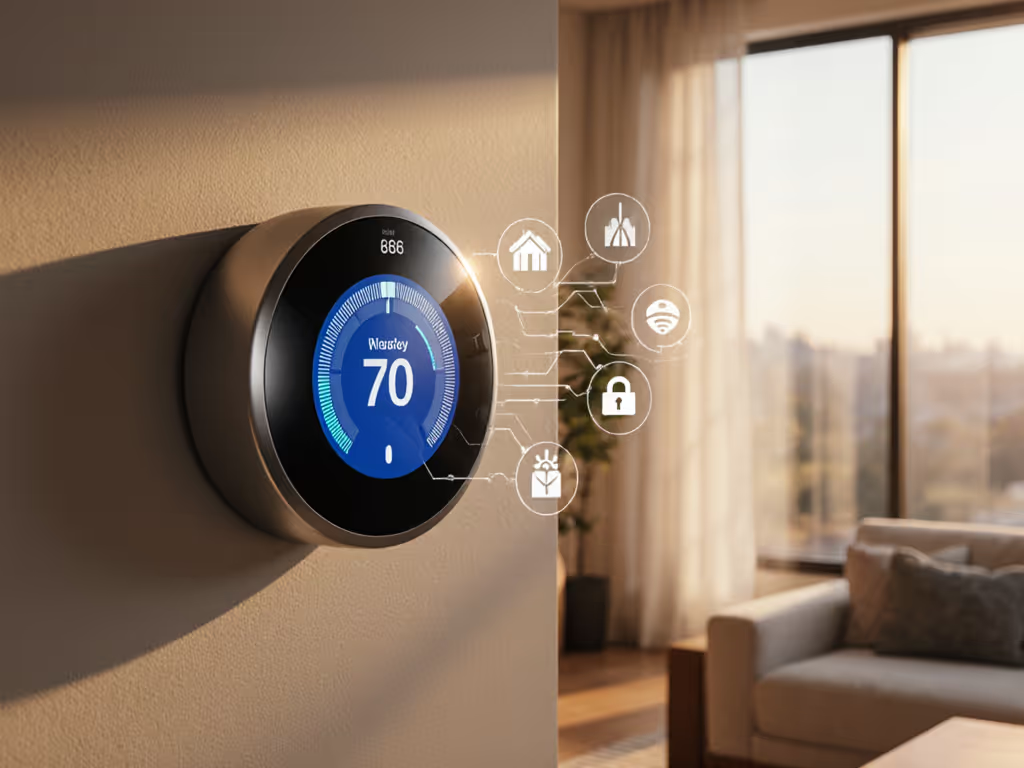
As health-conscious consumers increasingly seek home systems that adapt to their physiological needs, health monitoring thermostat integration and biometric thermostat control represent the frontier of personalized comfort. But what happens when your vital sign responsive climate control depends on cloud services that fail during critical moments? After a recent storm that knocked out internet for two days, I witnessed how local-first approaches maintained comfortable temperatures while 'smart' systems relying on remote health data became mere wall decorations. This experience reinforced why I design systems where wellness-oriented thermostat settings continue functioning through outages.
Below, I've curated the most pressing compatibility questions based on real user pain points (not marketing promises). I'll analyze each issue through the lens of local reliability and system architecture, because when it comes to your health, downtime isn't an option.
FAQ: Health Monitoring Thermostat Integration
What exactly qualifies as 'health monitoring thermostat integration'?
True health monitoring thermostat integration goes beyond basic temperature control to adjust environmental conditions based on physiological data. However, most 'smart' implementations today rely on cloud processing that creates dangerous single points of failure. Genuine integration requires: For models that keep core functions running during internet outages, see our offline-capable thermostat comparison.
- Local processing capability for critical health-related adjustments
- Matter/Thread support to maintain connectivity during internet outages
- Verified medical data thermostat integration that respects privacy frameworks
Many manufacturers overpromise on biometric thermostat control features that only work when connected to proprietary cloud services. Without local execution, these systems become health liability risks during the very emergencies when stable environmental conditions matter most.
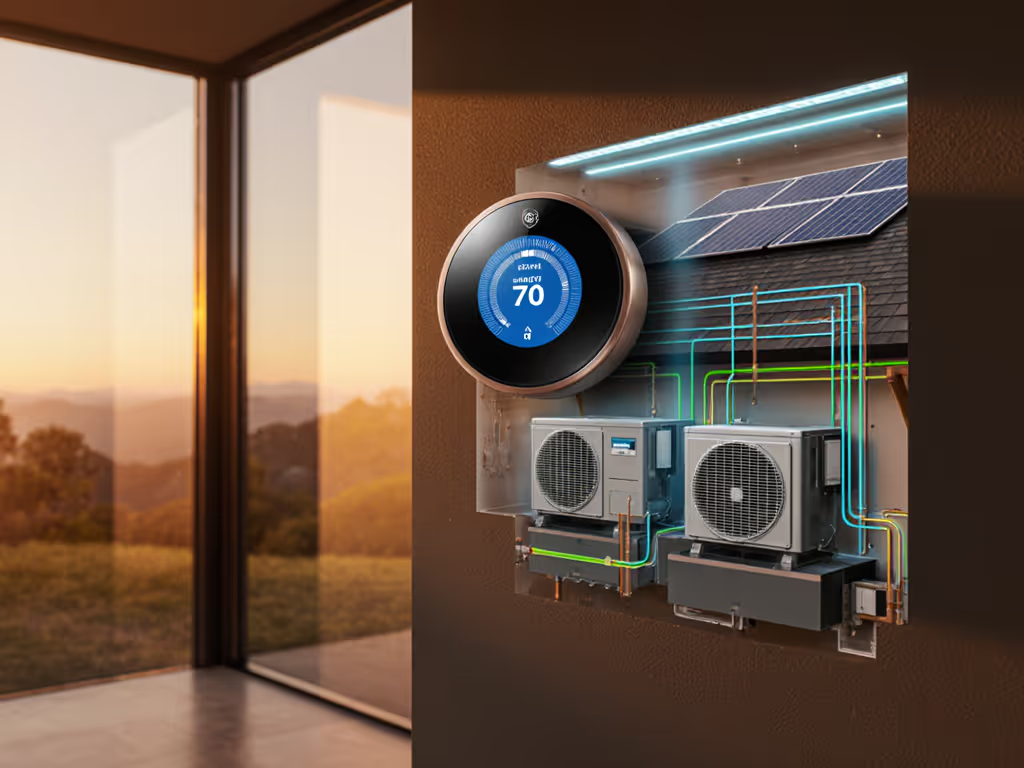
Consider this dependency map before investing:
Local first, cloud optional (comfort shouldn't hinge on an outage).
Which HVAC systems actually support verified health monitoring integration?
Not all heating and cooling systems can safely interface with health-responsive thermostats. Verified compatibility depends on both your HVAC type and thermostat capabilities:
| HVAC System Type | Compatible Health Monitoring Thermostats | Critical Limitations |
|---|---|---|
| Traditional Forced Air | Models with open APIs and local execution | Requires C-wire for continuous sensor operation during outages |
| Heat Pumps (Single/Multi-Stage) | Thermostats with advanced defrost cycle logic | Biometric data mustn't override freeze protection protocols |
| Radiant Floor Systems | Local-first controllers with slow-response algorithms | Temperature changes must be gradual for cardiovascular safety |
| Ductless Mini-Splits | Limited compatibility; requires IR bridge bypass | Health triggers often too slow to affect room conditions |
| Boiler Systems | Only compatible with modulating thermostats | Must prevent rapid cycling that damages heat exchangers |
Trust but verify: Some thermostats claim 'health integration' but only through cloud-connected third-party services that fail during the 20-40% of home internet outages that last more than 24 hours (per 2025 Home Networking Institute data).
How can I verify compatibility before installation?
The single most critical step is examining your HVAC control board's capabilities. If you need a primer on wiring, C-wires, and system types, start with our HVAC compatibility guide. Most health monitoring thermostats fail compatibility because they ignore these often-overlooked requirements:
- Electrical load tolerance: Health-responsive systems may call for more frequent adjustments that exceed older control board specifications
- O/B polarity configuration: Vital for heat pump systems where biometric needs might trigger emergency heat at dangerous moments
- Stage timing requirements: Health-triggered adjustments must respect manufacturer-specified compressor rest periods
- Humidification integration: Critical for respiratory health but often incompatible with basic thermostats
Map dependencies before buying. Create a physical flowchart of your HVAC wiring, noting:
- Total connected loads on the C-wire circuit
- Presence of auxiliary heat lockout settings
- Zone control board specifications (if applicable)
- Humidifier/dehumidifier controller type
This groundwork prevents the #1 installation failure: pairing a health-monitoring thermostat with an HVAC system that lacks the necessary safety interlocks for automated physiological responses.
What are the failure modes when health monitoring thermostats lose connectivity?
Most health-focused temperature management systems default to basic operation during outages, but critical failures occur when:
- Sleep environment settings revert to default temperatures that could trigger respiratory issues for sensitive users
- Medication-triggered climate adjustments fail during power outages (e.g., chemotherapy patients needing precise cooling)
- Elderly monitoring systems stop sending alerts because the thermostat's activity sensors depend on cloud processing
Verify that your thermostat maintains:
- Local schedules for critical health routines (pre-warming bedrooms before waking hours)
- Thread radio for communicating with battery-powered sensors when Wi-Fi fails
- Equipment-safe defaults that prevent dangerous temperature extremes during outages
During my storm outage experience, neighbors' cloud-reliant systems left elderly residents in dangerous cold while our locally-controlled radiant floor system maintained 68°F within 1° variance, without internet for 48 hours.
How does privacy impact medical data thermostat integration?
This is where most 'health smart' systems cross ethical lines. True wellness-oriented thermostat settings should:
- Process physiological data locally (on-device or on-home hub)
- Never transmit raw biometric readings to cloud servers
- Provide transparent data flow diagrams showing where health information travels
Be wary of systems requiring subscriptions for health features, as this often indicates they're monetizing your medical data. For concrete steps to secure data and networks, follow our smart thermostat privacy checklist. Verified privacy-conscious implementations use:
- Local HomeKit Secure Relay for remote access without cloud processing
- Matter specification for standardized, privacy-preserving device communication
- Zero-knowledge architectures where even the manufacturer cannot access your health-triggered settings
Check for specific privacy disclosures before integrating any wearable data with your climate system. Your health data is too valuable to trade for convenience.
What verification steps prevent compatibility disasters?
Don't rely on marketing claims. Execute these verification protocols:
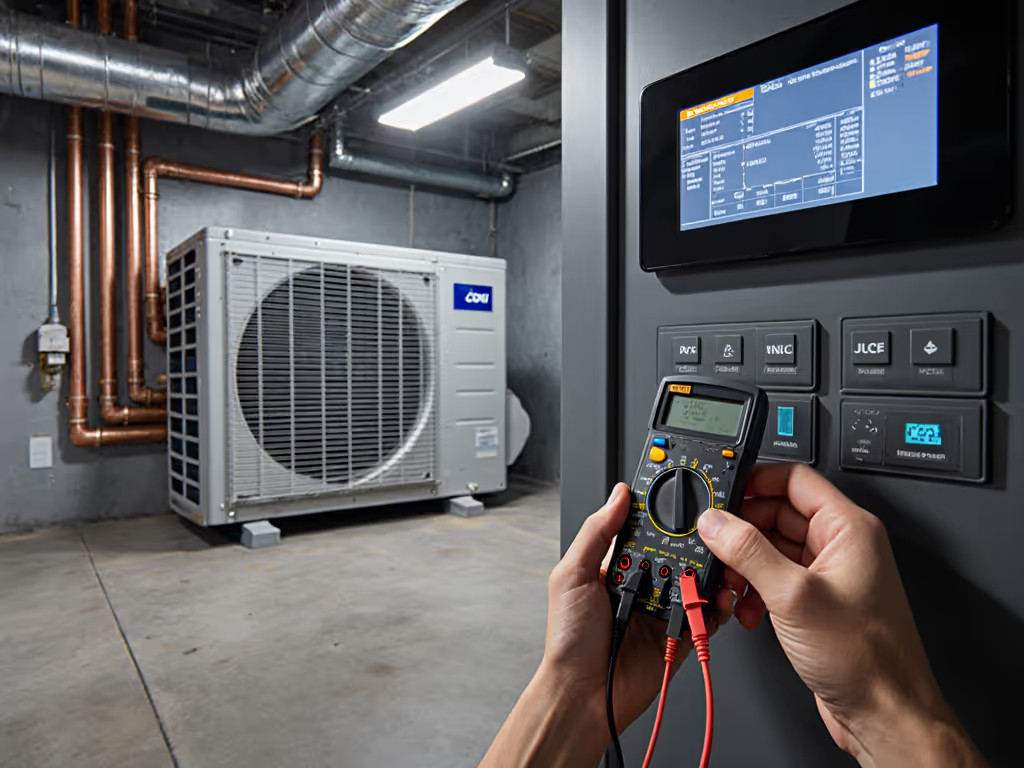
- HVAC control board compatibility test: Temporarily disconnect HVAC power and check thermostat compatibility with your specific board using a multimeter
- Local execution stress test: Simulate internet outage and verify health-triggered schedules still execute
- Response time measurement: Verify thermostat can adjust temperatures within clinically relevant timeframes (e.g., <15 minutes for fever reduction protocols)
- Failure mode walkthrough: Document exactly what happens when each component fails (sensors, hub, internet)
When one client nearly installed a 'health smart' thermostat that would have repeatedly tripped their geothermal system's safety cutoffs, these verification steps prevented $3,000 in potential equipment damage. For geothermal-specific requirements and setup, see our geothermal thermostat compatibility guide.
How can I future-proof my health monitoring integration?
Technology evolves, but your HVAC system shouldn't become obsolete. Build resilience through:
- Matter-certified devices that maintain compatibility through protocol updates
- Modular sensor architecture allowing replacement of biometric components without thermostat replacement
- Vendor-agnostic data formats that prevent lock-in to specific health platforms
- Local rule engines that can incorporate new health triggers without cloud dependency
I've designed systems that transitioned from basic temperature control to sophisticated health monitoring simply by adding new Thread sensors, no thermostat replacement required. To future-proof integrations, review our Matter compatibility checklist. This evolution path protects your investment while adapting to emerging health needs.
Beyond the Hype: Your Health Integration Checklist
Before committing to any health monitoring thermostat integration, verify these non-negotiables:
- Local execution capability for health-critical schedules (no cloud dependency)
- Verified HVAC compatibility specific to your wiring and control board
- Transparent privacy practices with local data processing
- Failure-mode documentation showing safe behavior during outages
- No subscription requirements for core health-responsive features
- Thread/Matter certification ensuring future compatibility
Map dependencies before buying. Your health shouldn't depend on a service agreement or a stable internet connection. The true measure of a health-focused thermostat isn't its feature list, but its performance when everything else fails.
Further Exploration
For those serious about implementing reliable health monitoring thermostat integration, I've compiled:
- A wiring compatibility matrix for North American HVAC systems
- A failure-mode assessment template to test your specific setup
- Privacy audit questions to ask before connecting health data to climate systems
These resources help you verify compatibility with your exact HVAC type while avoiding the common pitfalls that turn health-focused systems into dangerous liabilities. Because when your comfort literally affects your health, 'close enough' isn't acceptable (your system must work when it matters most).
Related Articles