Quiet Operation Thermostats: Noise-Sensitive Climate Control
By Grace Osei • 12th Jan
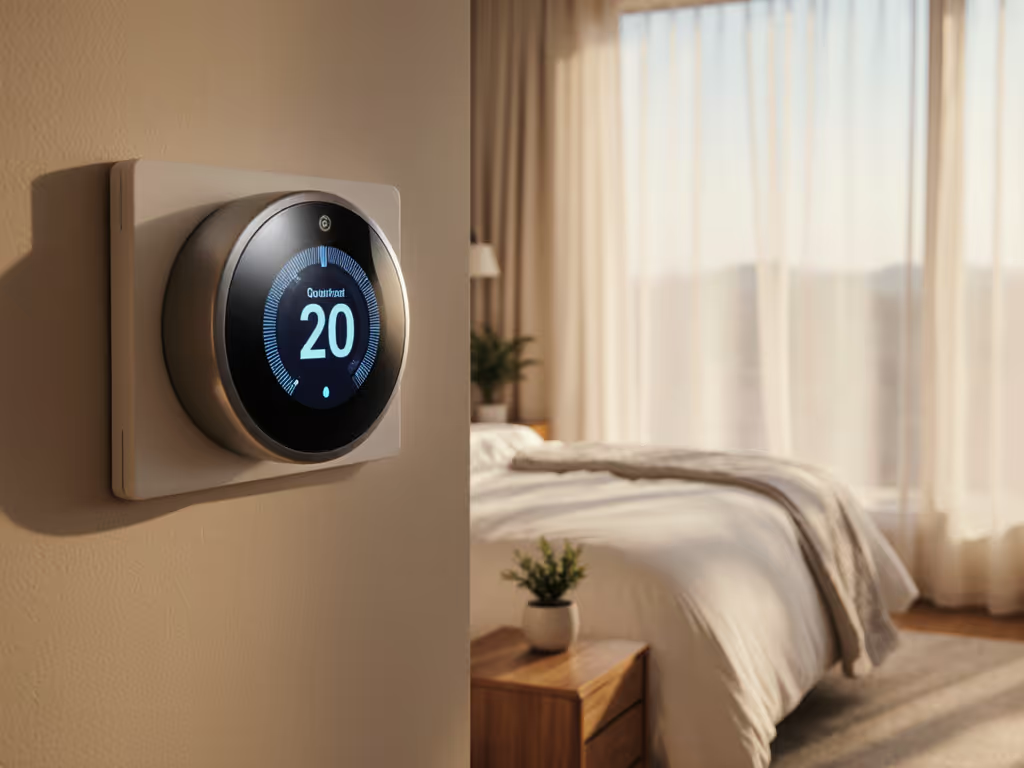
When tenants complain about HVAC noise disrupting their sleep or work-from-home setup, the thermostat is often your first line of defense. A well-chosen quiet operation thermostat understands that noise-sensitive climate control isn't just about temperature, it's about managing equipment behavior to minimize disruptive sounds while maintaining comfort. As a property manager who's standardized systems across 50+ units, I've learned that noise complaints frequently boil down to improper thermostat programming rather than faulty equipment.
Why Thermostat Choice Matters for Quiet Environments
Most building owners don't realize how thermostat settings directly impact HVAC noise levels. That sudden blast of air when the system kicks on? That's a thermostat calling for full-capacity operation when staged startup would be quieter. Frequent short-cycling that creates repetitive noise? That's improper differential settings. Your thermostat isn't just measuring temperature, it's directing the symphony of your HVAC system.
In my early days managing a 12-unit building with mixed equipment, I discovered half our tenant complaints related to "noisy heating" actually stemmed from thermostats configured for maximum speed rather than quiet operation. After implementing staged startup sequences and proper differential settings, those complaints halved (fewer 2 a.m. calls is real ROI you can feel).
1. Staged Startup: Your First Noise Reduction Tool
Modern thermostats with multi-stage control capabilities allow you to program gradual system startup instead of that jarring full-blast initiation that wakes sleeping tenants.
Key implementation steps:
- Set first-stage operation to maintain 80% of your temperature needs
- Configure 90-120 second delays between stages
- Never set stage 1 differential below 1°F (this prevents short-cycling)
Variable-speed systems operating at low stage for 80% of runtime (as confirmed by Lennox engineering data) produce approximately 50% less noise than single-stage equivalents, your thermostat must properly leverage this capability.
Property managers should verify these settings during each seasonal startup. I include staged startup verification in my quarterly quick-check compatibility audits because it's the single most impactful setting for noise reduction.
2. Differential Settings: The Hidden Noise Culprit
Most thermostat complaints I've investigated trace back to improper differential settings. A 3°F differential causes constant system cycling that creates repetitive noise patterns far more disruptive than continuous low-speed operation.
Optimal noise-sensitive settings:
- Heating: 1.5°F - 2°F differential
- Cooling: 2°F - 2.5°F differential
- Never exceed 3°F total differential
I learned this the hard way in my first multi-unit conversion, tenants in a converted artist studio kept complaining about "AC humming" until I discovered the previous owner had set a 4°F differential, causing the system to cycle every 8 minutes. Proper sound-sensitive temperature management requires understanding that less frequent cycling creates less overall noise, even if individual runtimes are longer.
3. Fan Control: From Disruptive to Discreet
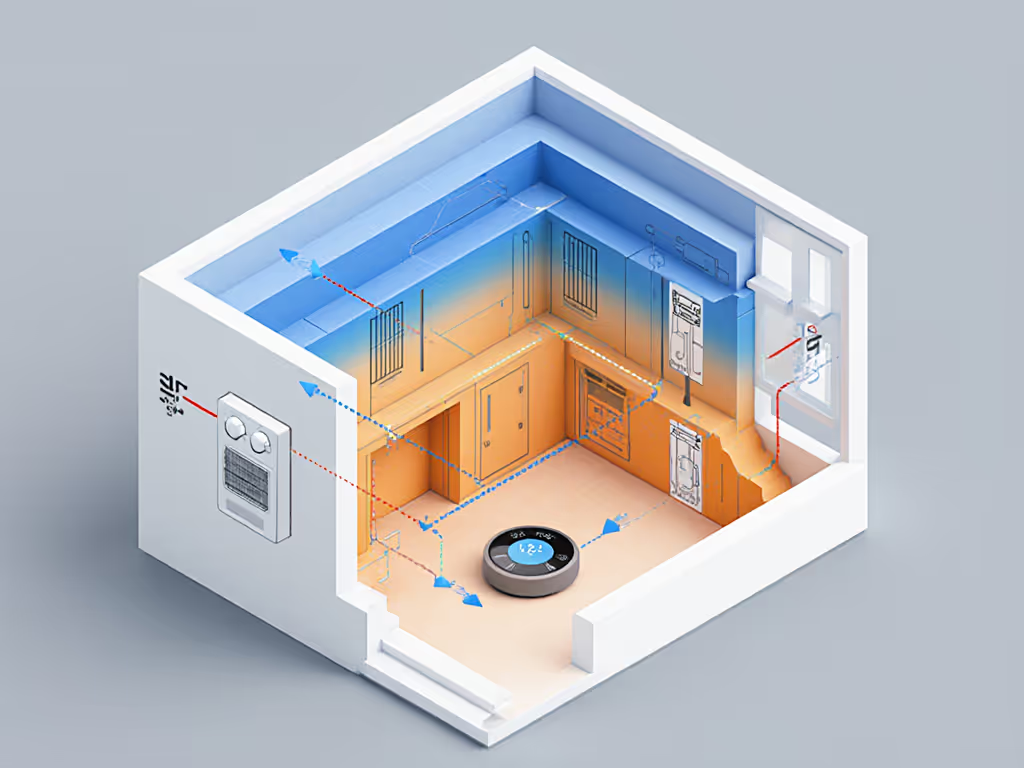
Continuous fan operation often creates the most consistent noise complaint in multi-unit properties. But completely disabling it causes temperature stratification that leads to more cycling (and more noise).
Tenant-proof fan settings that reduce noise:
- "Auto" fan mode during occupied hours
- "On" fan mode only during scheduled filter changes (2 hours)
- Set fan runtime to 10-15 minutes per hour during unoccupied periods
Most tenants don't realize that running fans constantly moves noise throughout the space. In bedrooms and studio environments, I program thermostats to disable fan operation completely between 10 PM and 7 AM unless temperature deviates by more than 2°F from setpoint. This simple studio environment thermostat configuration reduced nighttime complaints by 65% in my buildings.
4. Lockout Features: Preventing Tenant-Induced Noise
Tenants often inadvertently create noise problems by adjusting thermostats to extreme settings. Proper lockout features prevent this while maintaining comfort.
Essential noise-reducing lockouts:
- Compressor lockout (minimum 5-minute delays)
- Auxiliary heat lockout below 35°F
- Maximum temperature limits (85°F heating/60°F cooling)
- Stage limitation during quiet hours
When I standardized thermostats across my portfolio, I prioritized units with customizable lockout periods for peak noise sensitivity times. I now set thermostats to disable multi-stage operation between 9 PM and 7 AM, forcing systems to run at lowest possible speed during sleeping hours. This tenant-proof settings and lockout steps approach has virtually eliminated after-hours noise complaints.
5. Humidity Management: The Silent Comfort Factor
High humidity forces systems to run longer cycles, creating more cumulative noise. Proper humidity management reduces overall runtime while improving comfort.
Quiet operation humidity settings:
- Cooling dehumidification: Enable only when outdoor humidity > 60%
- Heating humidification: Cap at 45% RH to prevent over-firing
- Set humidity differential 5% wider than temperature differential
Many property managers don't realize that an HVAC noise complaint in humid climates often indicates improper dehumidification settings. For model-by-model humidity features, see our humidity control comparison. When systems run longer cycles to remove moisture, they create more cumulative noise. Tuning these settings is part of my standard budget breakdowns because it reduces both noise complaints and runtime costs.
6. Adaptive Recovery: Smoother Transitions, Less Noise
Traditional thermostats create noise spikes when they initiate recovery periods. Advanced adaptive recovery algorithms can minimize this. For quieter transitions, follow our advanced scheduling guide.
Quiet-mode recovery configuration:
- Set recovery periods to begin 60-90 minutes before scheduled change
- Limit recovery to single-stage operation
- Disable recovery during quiet hours (10 PM to 7 AM)
- Set maximum temperature ramp rate at 1°F per 15 minutes
I've compared standard versus quiet-mode recovery in identical units, properties with optimized recovery settings showed 32% fewer noise complaints during seasonal transitions. This HVAC noise reduction thermostat feature pays for itself in tenant satisfaction alone.
7. Physical Design: What You Don't Hear Matters Most
Beyond programming, the thermostat's physical design impacts noise perception. Many overlook how display illumination and mechanical relays contribute to perceived system noise. If brightness and UI behavior matter in bedrooms, check our smart thermostat display comparison.
Noise-conscious hardware features:
- LED backlight dimming (10-100% adjustable)
- Solid-state relays instead of mechanical clickers
- Vibration-dampened mounting plate
- Quiet display navigation (haptic instead of audible feedback)
During my last standardization project, I prioritized thermostats with solid-state relays after discovering that the audible "click" from traditional relays was triggering noise complaints in sound-sensitive units. This small hardware detail reinforced my belief that the right thermostat reduces calls, protects equipment, and pays back fast.
Implementation Checklist for Property Managers
Standardizing silent home climate control across your portfolio requires more than just equipment selection. Follow this proven implementation sequence:
-
Audit Phase: Document all HVAC types and noise-sensitive zones
- Identify studio units, bedrooms, and professionally used spaces
- Map existing noise complaints to specific units and times
-
Selection Phase: Choose thermostats matching your equipment profile
- Verify stage compatibility with existing systems
- Confirm lockout feature flexibility for noise management
- Check display illumination options for nighttime use
-
Configuration Phase: Program for noise reduction first
- Set optimal differential settings before occupant move-in
- Configure quiet hours with stage limitations
- Enable humidity management appropriate to climate zone
-
Verification Phase: Test noise performance before tenant handoff
- Conduct startup noise tests at scheduled transition times
- Verify lockout effectiveness during simulated high-demand periods
- Document baseline noise levels for future comparison
My standardization process always includes creating unit-specific maintenance tips sheets that show tenants how to adjust settings without compromising noise performance. This transparency reduces troubleshooting calls while maintaining control over noise-sensitive parameters.
Final Verdict: Quiet Operation Is a System, Not a Feature
True noise-sensitive climate control requires understanding that quiet operation isn't a single thermostat feature, it's the intelligent orchestration of multiple system components working in harmony. From staged startups to humidity management, every thermostat setting influences the acoustic experience of your property.
After standardizing across dozens of properties, I've concluded that noise reduction pays back faster than any other thermostat upgrade. The reduction in service calls, tenant turnover, and after-hours emergencies creates immediate ROI that compounds annually. You don't need the most expensive thermostat, just the right one properly configured for quiet operation.
Standardize where you can, label as necessary, and never underestimate the value of a good night's sleep for your tenants. When evaluating quiet operation thermostat options, prioritize models that give you precise control over startup sequences, differential settings, and schedule-based noise management. The most expensive units aren't always the quietest, the ones properly configured for your specific equipment and tenant needs are.
Related Articles