Thermostat Circular Economy: Manufacturing to Recycling
By Priya Nandakumar • 15th Feb
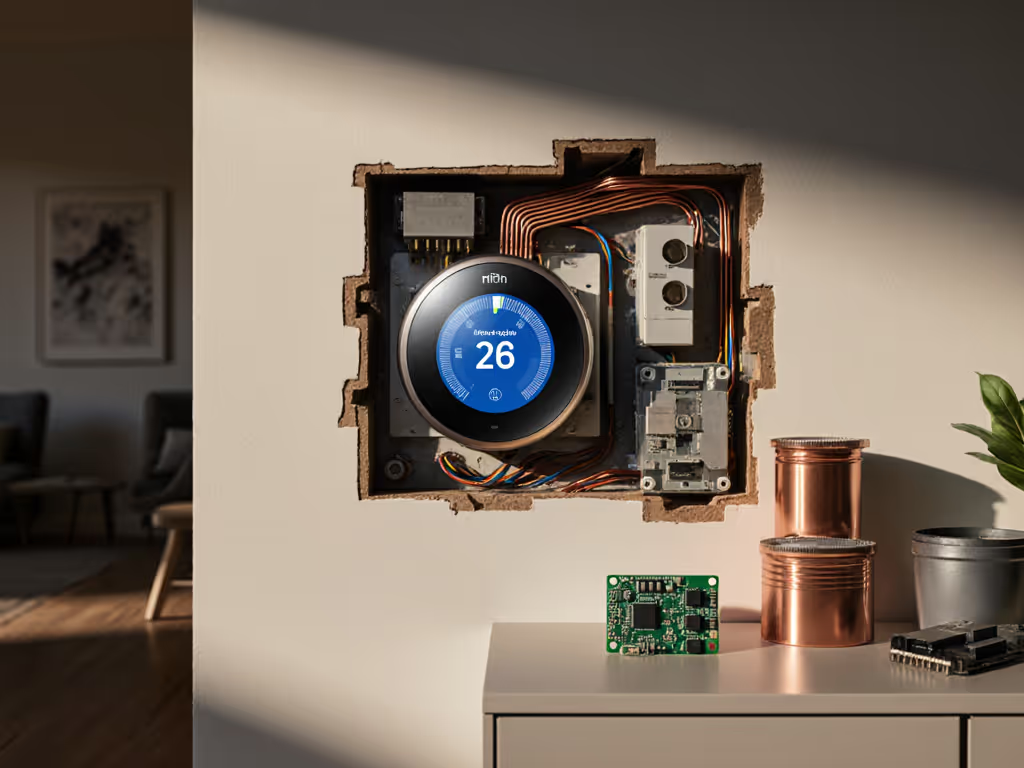
When you replace a thermostat, you're participating in a supply chain that stretches from the factory to a recycling facility. Sustainable thermostat manufacturing and thermostat circular economy principles are reshaping how brands design, build, and recover these devices, and understanding this lifecycle helps you make a purchase that truly aligns with your values and equipment needs.
Why the Circular Economy Matters for Your Thermostat
The traditional "take-make-dispose" model treats a thermostat as a single-use product: manufacture it, sell it, and send it to a landfill when you're done. A circular approach flips this logic. Instead, manufacturers now ask: How can we design thermostats to last longer, be repaired, be refurbished, or be recycled into new products? For homeowners, this matters because a durable, well-designed thermostat reduces replacement frequency, supports warranty claims, and keeps functional devices in service longer.
At the core of this shift is a simple truth: match features to terminals, not to marketing alone. A thermostat must suit your exact HVAC equipment (whether that's a single-stage furnace, a multi-stage heat pump, or a dual-fuel system). A poor fit means early failure, premature replacement, and wasted materials. A thoughtful match extends the device's lifespan and maximizes its value to you.
How Are Modern Thermostats Designed for the Circular Economy?
Durability and Longevity
Manufacturers now prioritize eco-design thermostat principles by engineering devices built to last decades, not years. Ecobee's thermostats, for example, have an average lifespan that is roughly 4x longer than a smartphone[1]. This extended longevity is the first and most effective layer of sustainability: if a product lasts longer, fewer replacements are needed, and fewer materials flow into the waste stream. To see which brands back longevity with real long-term support and update policies, compare our analysis of software support histories.
This design philosophy reflects a critical insight: a thermostat that fails prematurely because it doesn't match your wiring, zoning, or HVAC type is wasted potential. I've seen this firsthand on service calls: a homeowner upgraded to a "smart" thermostat that looked modern but wasn't compatible with their dual-fuel setup. When they incorrectly tied W2 (auxiliary heat) into the AUX terminal without proper outdoor sensor logic, they short-cycled the furnace constantly, damaging equipment and forcing an early return. Durability and compatibility are inseparable.
Repairable and Upgradable Design
Circular manufacturing thermostat practices now include modular components, user-replaceable batteries, and clear service pathways. A well-designed device lets technicians swap batteries, update firmware, or replace a damaged display without retiring the entire unit. This repair-first approach extends the economic and environmental life of your thermostat significantly.
Sustainable Materials and Packaging
Manufacturers are reshaping thermostat material lifecycle practices from the ground up. Ecobee has shifted to paper envelopes for hardware packs (screws, wall mounts) and introduced Paperfoam® starch trays in packaging (fully compostable and recyclable materials[1]). An experiment using vermicomposting showed that 95 percent of the material decomposed within 4 months[1]. This means the box your thermostat arrives in doesn't become a landfill burden.
Internally, designers are prioritizing recyclable plastics, copper, and circuit board materials that can be recovered and reused, rather than exotic alloys or glued-together assemblies that force destruction and waste.
What Happens When Your Thermostat Reaches End of Life?
The Refurbished Path
Not every old thermostat goes to recycling. Many are returned through Certified Refurbished programs, where they're tested, repaired, and sold at a discount. This keeps a functional device in service, extending its total lifespan and delaying material recovery. For buyers, refurbished models offer savings and reduced environmental impact.
The Recycling Process
When a thermostat truly reaches end of life, it enters a recovery system. In both the U.S. and Canada, recovered thermostat materials (plastics, metals, and electronic components) are processed through resource recovery services[2]. The approach differs slightly by region:
In the United States:
- Plastics and metals are sorted and recycled separately[2]
- Electronic components are recovered for secondary use[2]
- The Thermostat Recycling Corporation (TRC), established in 1998, manages the process[2]
In Canada:
- Batteries are removed first[2]
- Devices are dismantled, shredded, and sorted[2]
- Shredded plastic goes to Canadian plastic recyclers[2]
- Circuit boards are processed at smelters to recover valuable metals[2]
- Steel and non-ferrous metals are directed to Canadian metal recyclers[2]
- The Thermostat Recovery Program (TRP), launched in 2006, oversees the effort[2]
Mercury Recovery: A Critical Legacy
Older thermostats (pre-2000s) often contained mercury to control heating and cooling. A single thermostat could hold 1 to 4 mercury vessels, each containing roughly 2.5 grams of mercury[2]. Together, the TRC and TRP have safely recovered nearly three million mercury-containing thermostats and loose vessels (more than 13 tons of mercury extracted and responsibly disposed of[2]). If you're replacing an antique thermostat, proper recycling ensures mercury doesn't contaminate soil or water.
The Data: Why This Matters at Scale
Sustainable electronics production generates measurable climate benefits. For a home-level view, see our smart thermostat carbon impact analysis. Recycling copper, for instance, produces up to 85% fewer greenhouse gas emissions compared to mining new ore[3]. When millions of thermostats are recovered and their materials reused instead of discarded, the cumulative reduction in mining, energy, and emissions becomes substantial.
Canada's e-waste generation per person jumped from 8.3 kilograms in 2000 to 25.3 kilograms in 2020, with projections reaching 31.5 kilograms by 2030[2]. Responsible recycling infrastructure becomes critical as electronics proliferate. By ensuring plastics, metals, and components are processed responsibly, both regions can build a more sustainable ecosystem[2].
How Can You Participate in the Circular Economy?
Before You Buy
Match your thermostat to your equipment. Power off at the breaker; label wires before you touch anything. Verify that any thermostat you select is explicitly compatible with your HVAC type (furnace, heat pump, dual-fuel, or zoned system). A mismatch forces early replacement and multiplies waste.
During Use
- Keep your thermostat well-maintained: clean the display, check batteries, and ensure wiring connections remain tight[4]
- Register your device with the manufacturer for warranty support and recall notifications
- Choose models designed for repairability and firmware updates
At End of Life
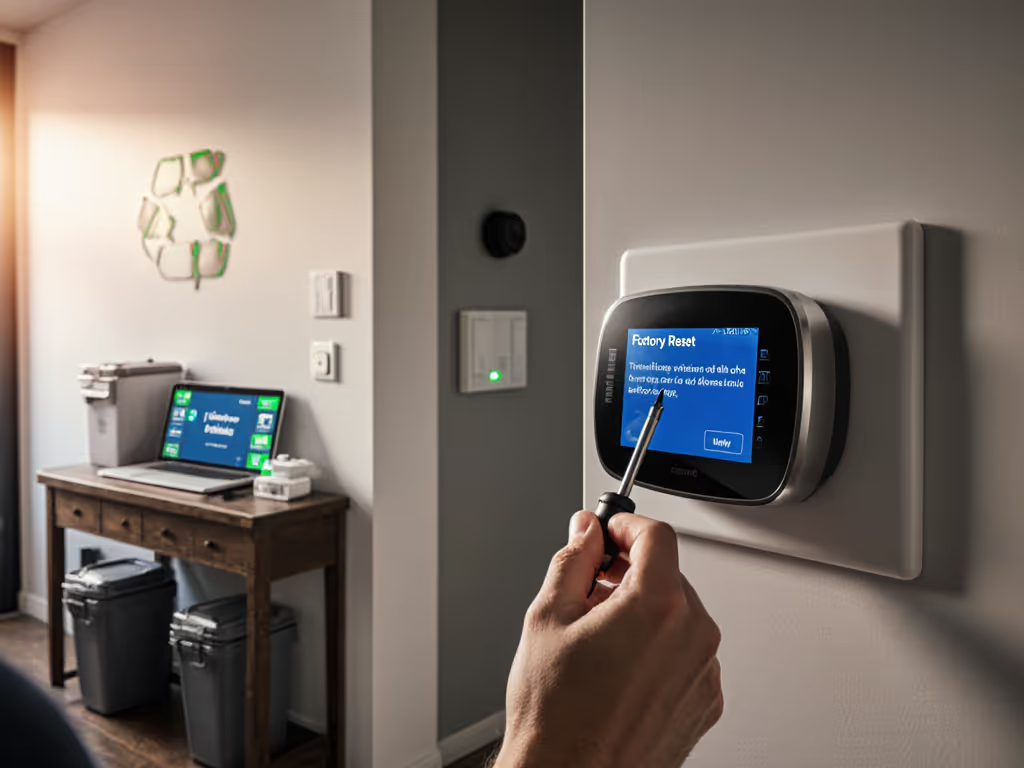
Do not throw your thermostat in the trash or curbside recycling. Instead: Follow our step-by-step smart thermostat disposal and data-wipe guide to protect your privacy and recycle responsibly.
- Contact a licensed HVAC technician to safely uninstall and recycle your old unit[2]
- Use an industry-approved drop-off location: The TRC (U.S.) and TRP (Canada) maintain certified recycling sites[2]
- Check local retailers: Many stores offer free e-waste recycling services[2]
- Explore community programs: Keep America Beautiful and other organizations list local options[2]
Final Verdict: A Thermostat's True Value
The circular economy isn't abstract. When you buy a thermostat designed for durability, compatibility, and repairability, you're investing in a device that will serve your home for years, and one that can be recovered and reused at end of life, rather than becoming waste. When you recycle responsibly instead of discarding, you're keeping valuable metals and materials in the supply chain and preventing mercury and e-waste from reaching landfills.
Your role begins at purchase: choose a model that matches your exact HVAC type and wiring. It continues through ownership: maintain it, update it, and keep it functional. And it concludes responsibly: recycle through certified channels, ensuring the next phase of the product's lifecycle is circular, not linear.
Durability, compatibility, and responsible recovery aren't marketing promises, they're engineering commitments that define modern sustainable thermostat manufacturing. By understanding this lifecycle, you make a choice that benefits your home, your wallet, and the broader ecosystem.
Related Articles